By David Larson
Carolina Journal
The 2026 primary elections end in less than two weeks. If you haven’t already voted early in person or by absentee ballot, I encourage you to do so. In fact, see the timeline below (from the State Board of Elections) for the key dates.
But regardless of whether or how you choose to vote, all the votes will soon have been cast and counted. So what should you keep an eye on as results begin to roll in? Here are five major races, plus a bonus category, to watch.
1. US Senate race primaries
Usually, when there is an open US Senate seat, hordes of strong candidates from both major parties will line up for an opportunity to be the nominee on the ballot in November. But after Republican Thom Tillis announced his retirement, a much different dynamic emerged. Powerful voices in both parties seemed to decide behind the scenes who the best candidate would be, then pressured other major figures against joining the race.
The reasons for this are obvious. Considering the seat is a top target for Democrats (with few other alternative pick-up options) and that Republicans do not want to lose the seat in a closely divided US Senate, it will be among the most expensive US Senate races in history, likely the most. So party insiders asked: Why waste donor money on an expensive primary? That means former national and state party chair Michael Whatley on the Republican side and two-term governor Roy Cooper on the Democratic side are the overwhelming favorites to win on March 3.
So, sure, it’s the biggest race of the night. But it is unlikely to be the most competitive. As the most high-profile of the state’s races, it will still be worth watching closely for surprises and data.
2. NC Senate District 26: Actually a bigger deal
Surprisingly, when someone asks how the Senate primary ended up in North Carolina, they more likely will be talking about NC Senate District 26, because it’s both competitive and consequential. Over the last 15 years, the most powerful person in the state has not typically been the Democratic governor (because they had to deal with strong legislative majorities, even supermajorities, that could work around them). It has mostly been the speaker of the state House and the president pro tem of the state Senate who have held the real power.
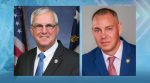
And the one man who has been there since the beginning, while House speakers have filtered through over this period, is Senate Leader Phil Berger. But because he’s been there for a long time now as arguably the most powerful man in the state, he’s had plenty of time to make decisions that some find objectionable (fairly or unfairly). And one of those people is Sam Page, the sheriff from his home county of Rockingham.
Page, by all available information (like what little polling exists), seems to be neck-in-neck, or even ahead. Knowing he may be in trouble, Berger successfully achieved a primary endorsement from President Trump. Trump even personally asked Page to drop out of the race and take a position in his administration. But Page politely declined, and now the race is rounding its final lap. If Page succeeds in knocking off Berger, it will create a major shake-up in Raleigh.
3. State Court of Appeals Seat 1 Republican primary:
Democratic Judge John Arrowood will defend his seat against a Republican in November, and unlike most of the other statewide judicial races, there is a primary to determine who that will be. In that Republican primary, Superior Court Judge Matt Smith will face off against fellow Campbell Law grad Administrative Law Judge Michael Byrne.
NC Supreme Court Chief Justice Paul Newby, a Republican, selected Smith for a “conservative judges list” to distribute to voters. But Byrne has pushed back against both the claim that Smith is the more conservative of the two and that Newby should be taking such an active role in choosing the nominee, also arguing that he has more experience than Smith. It will be an interesting primary to watch to see just how much influence Newby has in choosing future conservative jurists and to see who will face off against Arrowood for this important court seat.
4. The First Congressional District’s Republican primary:
North Carolina’s First Congressional District has had many crowded, competitive GOP primaries in recent years, as Republicans vie to unseat incumbent Democratic US Rep. Don Davis in the state’s only swing congressional district. But after a redraw to the district’s lines, done explicitly to push the balance in Republican’s favor, the 2026 primary has a much better chance to select the district’s first Republican member of Congress since Walter Pool in 1883.
The field of five includes the 2024 nominee, former Army colonel Laurie Buckhout, who narrowly lost to Davis in the general; as well as familiar local names like state Sen. Bobby Hanig, whose district covers many of the counties in NC-1; Carteret County Sheriff Asa Buck; attorney Ashley-Nicole Russell; and Lenoir County Commissioner Eric Rouse.
5. The Fourth Congressional District’s Democratic primary:
Of course, not all the notable races are in the Republican Party. Because NC-4 is not at all competitive in the general election, favoring Democrats by over 30 points, the Triangle-area district, which includes progressive bastions like Chapel Hill and Durham, makes its most important decision in the primaries — whether to choose a more moderate voice or a progressive purist.
And that’s basically the choice NC-4 sees in the 2026 primaries. In a rematch of the 2022 primaries, where former Orange County commissioner and longtime member of the state legislature Valerie Foushee defeated close ally of Bernie Sanders and Alexandria Ocasio-Cortez Durham County Commissioner Nida Allam — 46% to 37%, with a boatload of other candidates (including celebrity singer Clay Aiken) down in the single digits. Can Allam knock off Foushee, now a two-term incumbent, this time? Bernie’s visit to Durham last week suggests some national progressives are hoping so.
Bonus: Watch how the Democratic mavericks fare
The final one to watch isn’t one race, but a few that will be very determinative of whether Democratic Gov. Josh Stein will be able to make his veto stick, or whether Republicans will be able to continue leaning on certain swing-voting Democrats to occasionally join them on key votes.
Stein backed Rodney Sadler, one of two challengers to state Rep. Carla Cunningham of House District 106 in the Charlotte area. Cunningham was the most conservative Democrat member, and party leaders are hoping they can get a more reliable member in their caucus for the next biennium.
State Rep. Nasif Majeed of House District 99, also in Charlotte, has a couple primary opponents too, for the same reason. And another Democratic swing voter, former state Sen. Michael Wray, who lost his northeastern seat after former Gov. Cooper backed his opponent, is seeking to retake his seat.
Whether these mavericks can hold off the party establishment pressure, or whether Democratic leaders will successfully keep them from office, may be the deciding factor for whether a lot of key legislation is able to survive a veto from Gov. Josh Stein in the next long session (2027).
Subscribe to get the latest posts sent to your email.