




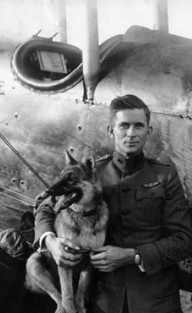
SAMPSON COUNTY – A man who rose to national prominence through his record-setting flights and his unique combination of religious vocation and aeronautical daring, soon will be recognized with a North Carolina Highway Historical Marker. The N.C. Historical Marker Program is part of the N.C. Department of Natural and Cultural Resources.
The marker commemorating the life and accomplishments of Lt. Belvin Womble Maynard (1892–1922), widely known as “The Flying Parson,” will be dedicated Saturday, Nov. 8, at 2 p.m., at the Harrells Town Hall (373 Tomahawk Highway, Harrells, N.C.).
Born in Morven, Anson County, Maynard moved with his family in 1905 to a farm near Harrells in Sampson County. From a young age, he demonstrated mechanical aptitude, regularly repairing farm equipment. At 15, he declared his intention to enter the ministry. He attended the Dell School in Delway and later Wake Forest College, where he studied theology. While still a student, he was ordained and began preaching.
With the U.S. entry into World War I, Maynard enlisted in the Army and joined the Army Air Service. He was deployed to France, where he tested aircraft for combat readiness. After the war, he returned to the U.S. and transitioned to reserve status, intending to resume his theological studies. However, aviation soon took precedence.
In August 1919, Maynard entered a round-trip air race between Mineola, New York, and Toronto, Canada. Flying a British-designed Airco DH.4 bomber, he completed the 1,042-mile journey in under eight hours, winning the race and gaining national attention. Later that year, he participated in the Transcontinental Aerial Derby, a major aviation event organized by Brig. Gen. Billy Mitchell to promote military aviation. The race required pilots to fly from Mineola to San Francisco and back, stopping at 20 designated points. Despite mechanical setbacks, including a ruptured radiator and a broken camshaft in Nebraska, Maynard completed the round-trip journey in nine days, four hours, and twenty-five minutes, setting a new world record.
Maynard’s fame grew, particularly in North Carolina. He flew to Raleigh at the invitation of the News and Observer and later attempted a flight to Wake Forest with Governor Thomas Bickett, the first time a North Carolina governor had flown. Although the flight was aborted due to landing difficulties, it underscored Maynard’s symbolic role in the state’s aviation history.
In 1920, he became a barnstorming pilot, performing aerial stunts, officiating weddings mid-flight, and even delivering sermons from the cockpit. His performances grew increasingly hazardous.
On Sept. 6, 1922, during an exhibition at the Rutland, Vt., fairgrounds, Maynard’s aircraft stalled during a spin and crashed, killing his two passengers. Maynard succumbed to his injuries en route to the hospital. He was honored with a funeral procession in New York City and interred at his family’s farm in Sampson County.
Subscribe to get the latest posts sent to your email.






Leaders Should Police Their Own Parties