
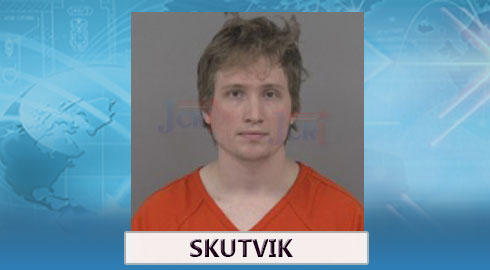
CLAYTON, N.C. – A 26-year-old Clayton man is facing 10 felony charges under a relatively new North Carolina law addressing obscene visual depictions of the sexual exploitation of minors, including certain images created using artificial intelligence.
Daniel Ivan Skutvik of Norris Road was arrested Saturday, November 7, following an investigation by the Johnston County Sheriff’s Office with assistance from the North Carolina State Bureau of Investigation.
According to investigators, deputies responded to Skutvik’s residence November 7 after receiving a report that someone had discovered inappropriate images on a computer.
Deputies subsequently applied for a search warrant to examine the computer.
With assistance from SBI personnel, investigators processed the computer and allegedly discovered hundreds of files containing child sexual abuse material.
Authorities also reported finding evidence that Skutvik had attempted to delete the files before law enforcement arrived. Investigators were reportedly able to recover the deleted images.
Skutvik was charged with 10 counts of obscene visual representation of sexual exploitation of a minor. He was held under a $300,000 bond.
New State Law Addresses AI-Generated Images
The charges fall under North Carolina General Statute 14-190.17C, which took effect December 1, 2024, as part of the state’s Modernize Sex Crimes Act.
The legislation expanded North Carolina’s criminal laws concerning sexual exploitation of minors, including certain computer-generated and digitally altered images.
One of the most significant provisions allows prosecution involving obscene sexual depictions of minors even when the child portrayed does not actually exist.
This means certain images created entirely through artificial intelligence, computer software or other digital technology can qualify under the law, provided they meet the statutory requirements.
Previously, North Carolina’s child sexual exploitation laws primarily addressed material involving actual children, including photographs, videos and other prohibited depictions.
The new statute makes it a Class H felony to knowingly possess material that depicts a minor engaging in sexual activity and meets the legal definition of obscenity.
Producing, distributing, receiving or possessing such material with the intent to distribute it is a more serious Class E felony.
The law specifically states that prosecutors are not required to prove that the minor depicted actually exists.
Subscribe to get the latest posts sent to your email.