
RALEIGH N.C. – On Monday, Lieutenant Governor Rachel Hunt visited North Carolina State University’s College of Agriculture and Life Sciences (CALS) to promote statewide investments in agricultural education.
CALS is NC State’s land-grant agriculture college: it teaches, runs the state’s agricultural research system and leads Cooperative Extension in all 100 counties. Dean Garey Fox, a former head of Biological and Agricultural Engineering, has led the college since 2023.
“Agriculture as we know it is changing rapidly across the state,” said Lt Governor Hunt. “Our farmers and Ag workforce can’t be caught flatfooted. CALS is the model for how to prepare today’s workforce for the Ag jobs of the future. That’s how agriculture remains our state’s largest industry.”
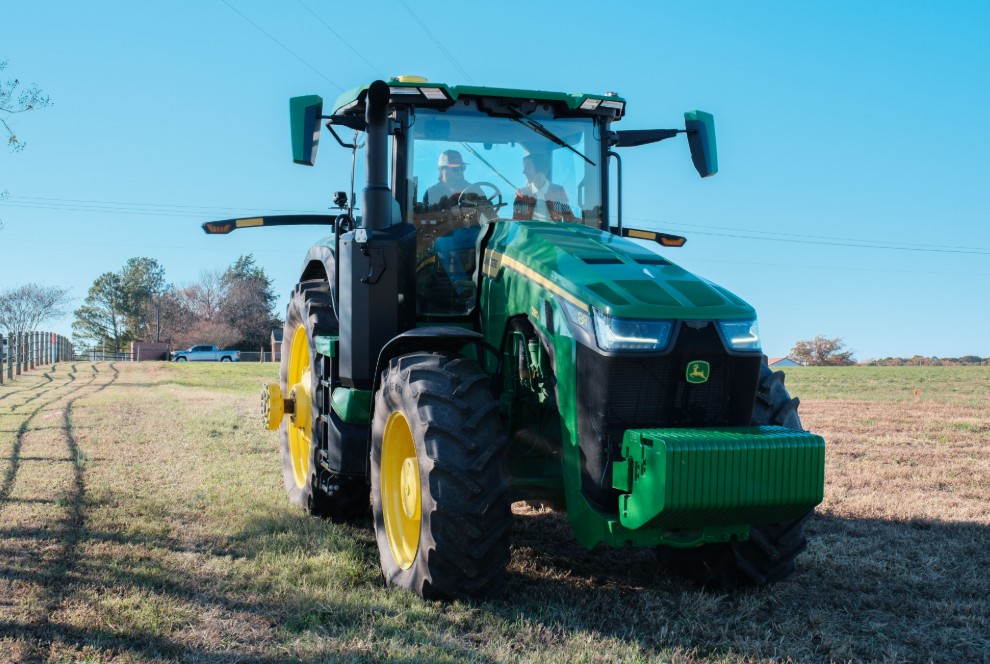
Lt. Governor Hunt toured the Dairy Education Unit, Chicken Education Unit, and climbed inside the cab of a tractor for a Precision Ag demo.
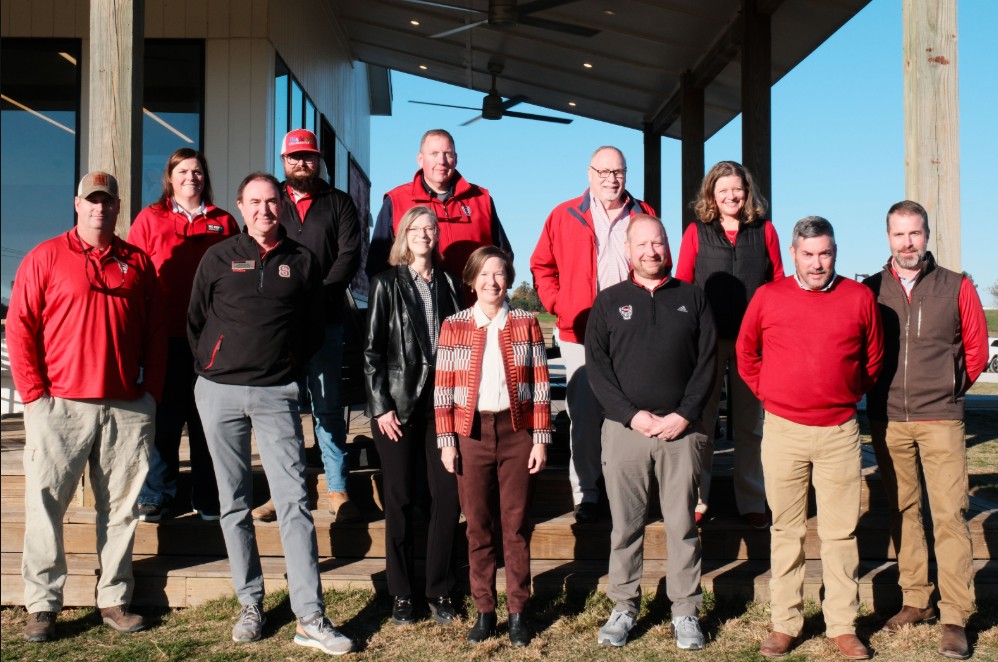
“CALS is growing the future of agriculture not only for North Carolina, but for the nation,” said Dr. Amy Grunden, Director of the North Carolina Agricultural Research Service.
“Our agricultural research stations play a critical role in connecting research and innovation with the needs of North Carolina’s farmers and agricultural communities. Continued support for agricultural research and education is essential to keeping our state’s largest industry strong and competitive,” added Dr. Loren Fisher, Assistant Director of NCARS and Director of Research Stations and Field Labs.
This visit is part of the Lt. Governor’s Jobs of the Future initiative, which focuses in part on the agricultural education-to-industry pipeline. Through these visits, the Lt. Governor is tracing students move from middle and high school Ag classrooms, FFA and 4-H, through community colleges and universities, into jobs on farms and in agribusiness and AgTech.
A 2026 report found that he food, fiber, and forestry sector employed 20% of North Carolinians and generated $117 billion in economic impact in 2024. However, an aging, shrinking farm base meant that NC farms fell from 59,120 in 1997 to 42,817 in 2022.
Today, most Ag jobs are not on the farm. Food processing, equipment, data, animal health and finance need workers with technical training. Agricultural education is the main K-12 on-ramp to those careers, especially in rural counties. By investing in a trained workforce and Extension network, the state can adapt to a rapidly evolving agricultural sector.
Subscribe to get the latest posts sent to your email.