




North Carolina has no cases of New World Screwworm
RALEIGH – Due to the detection of New World Screwworm in the United States, the North Carolina Department of Agriculture and Consumer Services will enforce additional interstate movement health requirements for warm-blooded animals, including livestock, horses, dogs and cats, entering North Carolina from states affected by a New World Screwworm Infested Zone.
“The positive cases in Texas and New Mexico are disappointing but not surprising considering the close proximity to Northern Mexico,” said State Veterinarian Mike Martin. “The restrictions on interstate movement of animals from these affected areas is one of the tools we are using to help our state be in a better position to prevent and control the spread of New World Screwworm.”
All warm-blooded animals imported into North Carolina from an Infested Zone must have an accredited veterinarian complete the normal importation requirements and comply with the NWS National Continuity of Business Standardized Animal Movement Guidance. The Interstate Certificate of Veterinary Inspection shall be valid for no more than seven days from the date of inspection and must include the statement, “All animals listed have been inspected and found free of evidence of NWS infestation.” An entry permit number must be requested at least 48 hours prior to movement.
Permit numbers can be requested Monday through Friday from 8 a.m. to 5 p.m. by emailing NC-ICVI@ncagr.gov.
All warm-blooded animals entering North Carolina from outside an Infested Zone but within a Surveillance Zone must have an accredited veterinarian complete the normal importation requirements and be accompanied by an ICVI including the statement, “All animals listed have been inspected and found free of evidence of NWS infestation.” The ICVI shall be valid for no more than seven days from the date of inspection.
New World Screwworm was detected in Zavala County, Texas on June 3, 2026. Additional cases have since been detected in other Texas counties and in New Mexico. This is a serious pest that affects livestock, pets, wildlife, and, less commonly, people and birds.
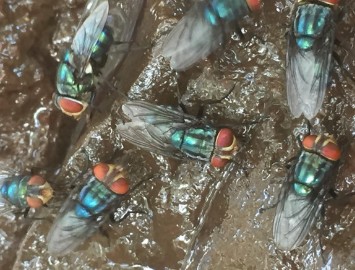
Adult NWS flies can look very similar to houseflies and the maggots (larvae) look similar to our native fly maggots. Laboratory identification is needed to identify maggots accurately.
The NWS larvae feed on the living tissue of warm-blooded animals and they cause extensive damage to wounds by feeding on this healthy tissue.
If you suspect New World Screwworm maggots in a wound call your local veterinarian or NCDA&CS at 919-707-3250. New World Screwworm is considered a reportable disease in the United States.
New World Screwworm is not a food safety concern and the food supply is safe. For more information on the current outbreak visit www.screwworm.gov.
Subscribe to get the latest posts sent to your email.






Shrinking Campus Programs Is No Conspiracy