




SMITHFIELD – A baseball stadium approved by the Smithfield Town Council last November with a $6 million price tag is now projected to cost approximately $16.3 million, an increase of more than $10.2 million, or nearly 172 percent.
Despite the higher cost, the Town Council voted Tuesday night, Aug. 18, to continue moving forward with the project after Mayor Andy Moore broke a 3-3 council tie.
Mayor Pro Tem Sloan Stevens and Council Members John Dunn and Steve Rabil voted in favor. Council Members Travis Scott, Doris Wallace and Dr. Gettys Cohen voted against the expenditure.
Councilman Roger Wood was absent as he recovers from medical issues.
The town’s latest budget places Phase 1 at $10,772,752 and Phase 2 at $5,525,999, for a combined projected cost of $16,298,751.
That is $10,298,751 more than the $6 million stadium plan approved by the council in November 2025.
From $6 Million To $16.3 Million
When the council initially approved the Tobs baseball partnership last November, the stadium was presented with a construction cost of no more than $6 million.
Councilman Travis Scott reminded the board Tuesday that the contractor had previously indicated the stadium could be constructed for $6 million to no more than $8 million.
The latest estimate has now more than doubled that upper figure.
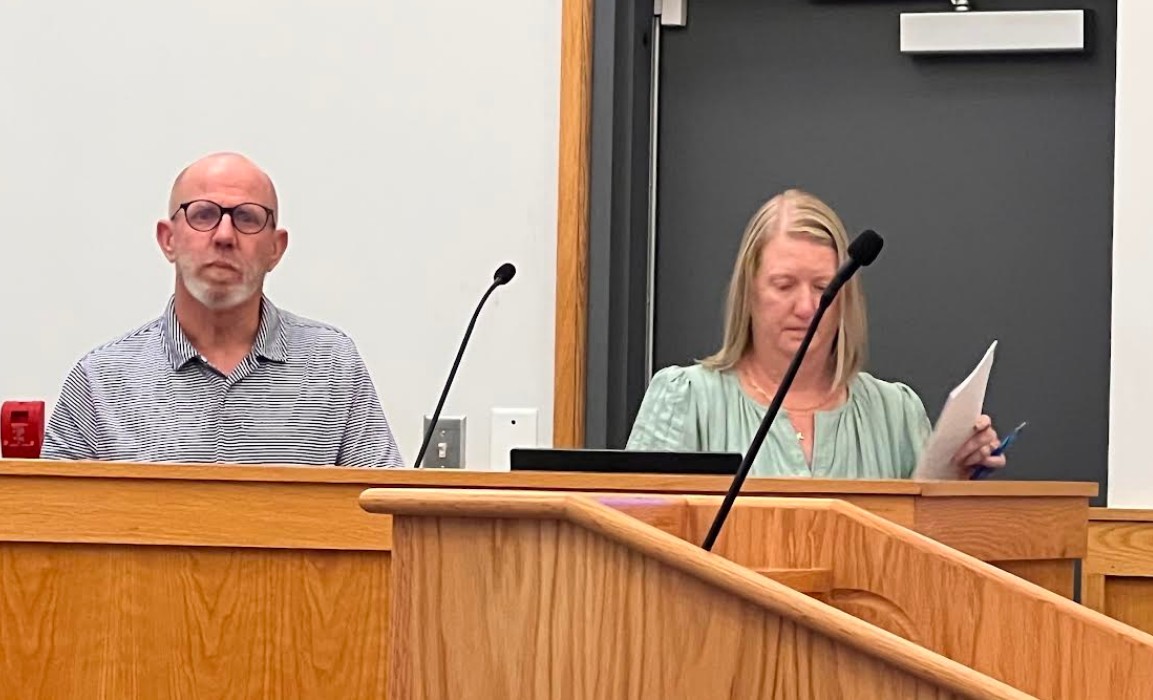
Interim Town Manager Kim Pickett said several factors account for the increase, including relocation of the stadium, a larger facility and substantially more site work.
The current design also includes 258 parking spaces, compared with approximately 60 contemplated in an earlier plan.
The stadium has changed locations during the planning process. It was originally proposed at the existing Community Park before the council temporarily abandoned that site and pursued a long-term arrangement at Legion Field. The town later reversed course again after acquiring property for a new community park and stadium site.
Pickett also cited additional clearing and grading expenses associated with the current property.
Asked whether the project could ultimately cost more than the new $16.3 million figure, Pickett replied, “This is it.”
Phase 1 Alone Tops $10.7 Million
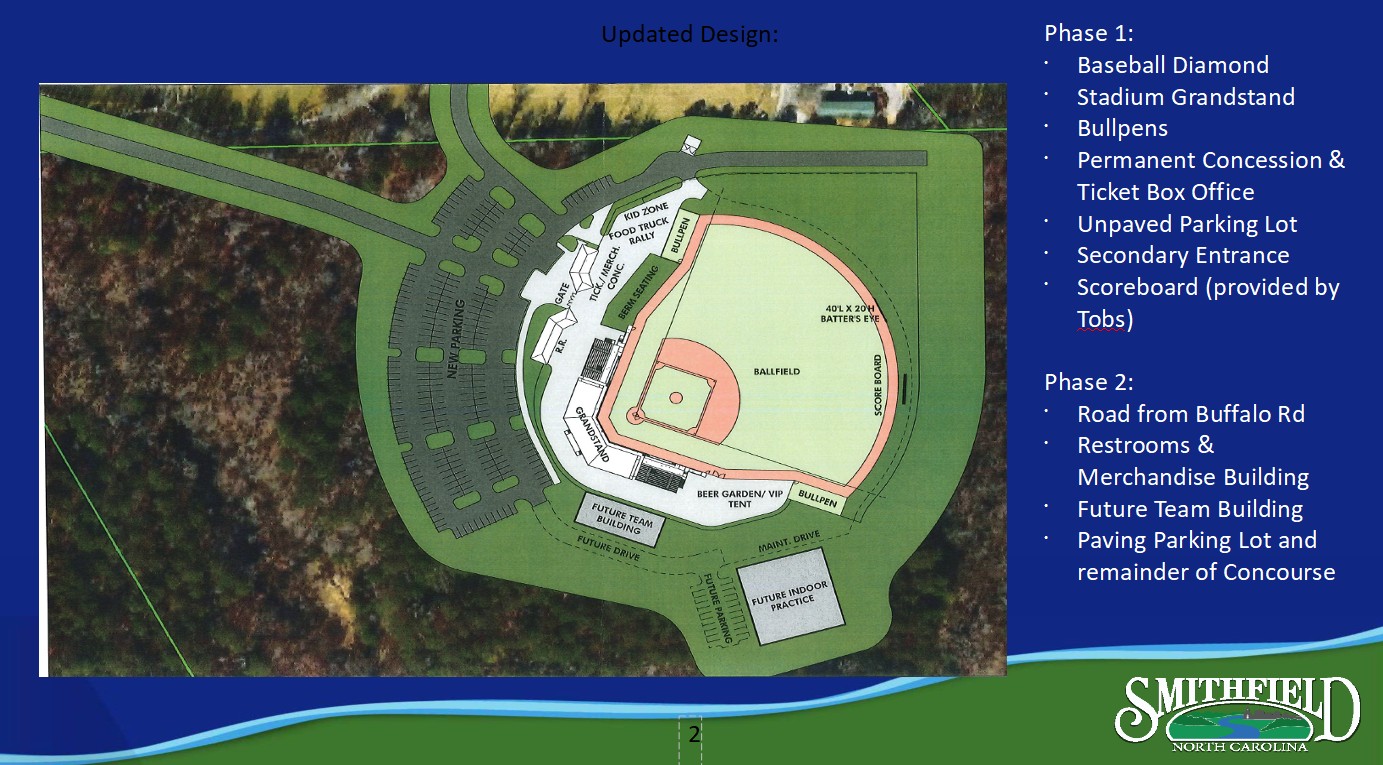
Under the plan presented Tuesday, Phase 1 includes the baseball diamond, stadium grandstand, bullpens, permanent concessions and ticket box office, an unpaved parking lot and a secondary entrance. The Tobs are expected to provide the scoreboard.
Among the largest Phase 1 costs are approximately $2.72 million for exterior improvements, $2.6 million for design, incidentals and contingency, $1.65 million for furnishings, $1.54 million for electrical and utilities, and nearly $848,000 for site demolition and earthwork.
Pickett said $502,125 has already been spent on the project.
The town’s presentation shows the latest budget from Muter Construction was received Aug. 13, just five days before Tuesday’s council discussion.
Cohen questioned why the substantially higher total had not been discussed earlier in the process.
Mayor Moore called the new information “a lot to digest.”
$3.27 Million From Town Reserves
The town currently identifies approximately $7 million from several sources for the stadium project.
That includes $2 million in Town of Smithfield economic development funds, $584,187 from the tourism budget, $250,000 from a town capital budget, $365,789 from the Bingham Park fund, $300,000 in park-in-lieu funds, $500,000 from the Johnston County Visitors Bureau, $2 million from Johnston County and $1 million from the 2026 state budget.
That still leaves Phase 1 short of the $10.77 million needed.
To close the gap, the town plans to ask the Johnston County Visitors Bureau for an additional $500,000 and withdraw $3,272,752 from Smithfield’s fund balance, or reserves.
Scott asked whether borrowing or other debt financing had been considered for the stadium.
Pickett said no.
Another $5.5 Million In Phase 2
Phase 2 carries an estimated cost of $5,525,999.
It includes a road from Buffalo Road, restrooms and a merchandise building, a future team building, paving of the parking lot and completion of the remaining concourse.
Town officials discussed the possibility of dividing some of that work into a third phase next year.
Scott questioned where the money for Phase 2 would come from.
No complete funding package for the $5.5 million phase was presented Tuesday.
Pickett said she plans to return to the council in September with information on naming rights for the stadium and playing field. Pickett and Parks and Recreation Director Gary Johnson estimated those agreements could potentially generate a combined $1 million to $1.5 million.
Scott expressed concern the town could fall short of those projections. He pointed to a fundraising partnership associated with construction of the Smithfield Recreation and Aquatics Center (SRAC) that did not generate the amount originally anticipated.
‘It’s Just A Lot Of Money’
Stevens defended the expenditure and the use of town reserves.
“We’re a healthy town. We sit on a lot of money,” Stevens said. “It will be great once it’s done. … It’s not a bad thing. It’s just a lot of money.”
Stevens said taking $3.27 million from reserves would not increase the town’s property tax rate, noting the money had already been collected from taxpayers.
He also pointed to the potential long-term economic development impact of the stadium.
“I’m a long term thinker,” Stevens said. “This will outlive all of us.”
Stevens suggested there was still a “good chance” Smithfield itself could build the stadium for $6 million to $7 million if contributions from Johnston County, the state and other outside sources are excluded when calculating the town’s direct share.
The total project budget presented to council Tuesday, however, was $16.3 million from all funding sources.
‘This Is A Want, Not A Need’
Councilman Scott questioned whether the stadium represents the best use of more than $16 million in public money.
He said the same amount could have a significant economic development impact if invested elsewhere in Smithfield.
Scott also said Smithfield already spends more per capita on parks and recreation than Cary or Raleigh, even before stadium expenditures are included.
“This is a want, not a need,” Scott said. “The town has many other needs.”
He described himself as “alarmed” by the increased estimate and questioned whether inflation or other construction expenses could ultimately drive the price higher.
Scott also reminded council members that there remains opposition to the stadium within the community and repeated concerns that no public hearing has been held specifically on the project or its financing.
A public hearing was held on rezoning the stadium property, but there has not been a separate public hearing devoted specifically to approving the stadium expenditures.
Wallace Questions Priorities
Wallace questioned the proposed $3.27 million withdrawal from reserves in light of other needs around town.
She said Pickett had told her only weeks earlier there was no money in the budget to repair a fence at Gertrude Grady Johnson Memorial Park in West Smithfield.
Pickett disputed that characterization, saying she had not told Wallace money was unavailable but instead said she would look into the issue.
Moore said it was important for Smithfield to continue taking care of the parks and facilities the town already owns.
Pickett was also asked whether anything could be cut from the $10.77 million Phase 1 budget.
“No. Trust me. We have looked. We have turned every rock,” Pickett responded. “No. No.”
Questions About Development Rules
Scott sought assurances that Smithfield would follow its own Unified Development Ordinance and other development regulations as the stadium moves into construction.
“I value my job too much,” Pickett replied.
Scott also questioned whether allowing grading and clearing before final site-plan approval could establish a precedent for private developers seeking to do the same thing.
Pickett said it would not establish a precedent and described such work as common practice.
Scott continues to have concerns about alcohol permitting at the stadium, an issue he has raised during previous council discussions.
Town Continues Paying Tobs Office Rent
Separate from the $16.3 million stadium budget, the Town of Smithfield continues to pay for office space used by the Tobs organization.
The town pays $1,000 per month for space upstairs in a downtown bank building.
That expense is not included in the stadium construction figure discussed Tuesday.
Mayor Breaks Tie Again
Stevens made the motion to proceed with the $16.3 million project, seconded by Dunn.
Stevens, Dunn and Rabil voted yes.
Scott, Wallace and Cohen voted no.
With the council deadlocked 3-3, Mayor Moore cast the deciding vote in favor, giving the proposal a 4-3 majority.
“Keep pressing on,” Stevens said.
Residents Question Rising Cost
Several residents later addressed the stadium during the public-comment portion of Tuesday’s meeting.
Rick Bruckner said the project has changed repeatedly during the past several months.
“It feels like we are making up the rules as we go,” Bruckner said.
He also questioned why there had not been a public hearing specifically on the stadium and its financing.
“Travis Scott asks a lot of questions that don’t get answered,” Bruckner said. “It’s almost a joke at this point.”
Bruckner also questioned the selection of the contractor, alleging that among the companies considered for the project, the town selected the only one without previous baseball stadium construction experience.
Smithfield resident and retired Johnston County 911 Director Brett Renfrow told the council he was not opposed to a new baseball park but questioned how much the town was ultimately prepared to spend.
“What is the amount that ends up being too much for this council?” Renfrow asked. “What is that number?”
He also questioned what taxpayers would receive for the investment and whether stadium visitors would generate significant spending at existing Smithfield businesses.
“What does the town get in return for $16.2 million?” Renfrow asked. “How does this benefit local businesses?”
What Comes Next
Smithfield now has a projected $16.3 million stadium budget, with Phase 1 scheduled to require more than $10.7 million.
The town plans to seek another $500,000 from the Johnston County Visitors Bureau and use $3.27 million in reserves to complete that first phase.
Pickett is expected to return to council in September with proposed naming-rights opportunities that could generate an estimated $1 million to $1.5 million.
Funding for the remaining $5.5 million Phase 2 has yet to be finalized.
Subscribe to get the latest posts sent to your email.

Comments are closed.



Wow it just keeps getting bigger and bigger just like officials pay and our yaxes
“This is a want, not a need” – one that if I recall, every council member voted on originally to approve, until it landed in Councilman Scott’s backyard and then he had a problem. Also, not a “want” that Mrs. Pickett brought, but rather something she inherited. Councilman Scott needs to lay off her and move on, don’t think it’s not lost on the people of Smithfield that the very next day there is bashing of her name “anonymously” because he didn’t get his way. Grow up and get a life, let people do their jobs.
Follow the money. If you dig into the finances of the Mayor and 3 “Yes” votes, you’ll understand.
Smithfield voters have no one to blame but themselves.
The Tobs aren’t affiliated with any MLB team. They’re not even a SIngle-A team. I can’t believe yall got suckered into this!
Several MLB players came from this lower-level baseball league. In addition, this stadium is not just for baseball. It’s going to be a hub for many community events. I think it’s going to be fantastic for the Smithfield community! Great use of space and I’m excited they are increasing the size of the stadium, especially the parking lot! Visit the Wilson stadium and see for yourself. It has made a positive impact on the area and economy.
What other community events have you heard that are confirmed for this facility?
Wilson stadium is associated with a MLB team.
You’re comparing apples to walnuts.
This isn’t Wilson.
The stadium the Tobs played at was Fleming stadium and had stood for decades. It is not the new one they built. It was old and dilapidated. I would be willing to spend on the new stadium what they originally spent on Fleming back in the 50’s.
Now what happens when they get half way through the building and the price tag goes up again? How much is a stadium worth? I mean it’s not like they are making it multi-use to where concerts could be held there, the only thing it can do is handle a single ball game at a time.
If it were simply a baseball stadium to be used a few months out of the year, then I would agree that it’s probably not worth the investment in Smithfield. However, this particular stadium will be multi-purpose and will be a community epi-center. Folks just need to stop being negative and begin supporting having the venue in Smithfield. It’s going to offer good, clean family entertainment and community events. Parents continuously say their kids need something to do in town so they can stay out of trouble. Well, parents, here you are. So, stop complaining.
Can you name the “community events” your reference?
Fireworks at the 4th of july
Those are free.
They knew the new projected cost BEFORE they voted …. they thought they could slide it through and no one would be the wiser!!!
CLEAN EVERY SINGLE ONE ON THE COUNSEL AND ANYONE THAT HOLDS A POSITION ON THE BOARD OFF AND START NEW!!!!!!!
Oh, and it’s not started yet.
The costs will continue to grow.
Clayton hosts their team in a city park. Added incremental costs are near zero.
Smithfield? 16 million and counting.
The return on investment estimates are laughable. A million for “Naming Rights?” Are you nuts? Nobody is going to spend a million dollars to have their company name associated with a dumpster fire expense.
This is ridiculous dump this project now!!!
What a waste of money! Put it towards fixing the parking issues downtown!
Ohhh you mean Market street?? That was a DOT decision
Can we sue to stop this?
As if anyone believed that they didn’t know the “truth” of the cost! 🤦🏻♀️😂! It’s insulting how stupid they think the public are but that’s arrogance for you. There will be a hidden paper trail but it’s all too common these days.
And the pillaging of of the south continues without end. Take a look at what they did up north and what its like now. Its almost like being terraformed by aliens like in the Sci-fi movies. They turn the environment into their habitat and milk all of the resources out of it until its dead and lifeless and then they move on to the next place of abundance. Life here for Johnston County residents is turning into one endless nightmare after another thanks to greed. I can’t wait to see this fail.
Hang your white flag.
The North has won Again.
When will you haters stop blaming all of the problems in Johnston County on the North? Seems that every problem that comes up gets dumped on Northerners, who live here just like you born and raised here. It’s tiring. Now a new baseball stadium being built with local funds, by local contractors and voted-on by local politicians gets blamed on Northerners. How ridiculous.
That makes perfect sense to build after doubling our property tax. How about using some of that money to give the kids something to get them out the house!
17 mill for a team that will play 23 home games a year. What kind of an idiot would approve this?
The Smithfield town leaders, apparently .
Then again, it’s not their money so they don’t care.
@Phil: Don’t blame the town leaders. Blame the public who voted every one of these fools into office. Some, multiple times. Put the blame where it belongs.
Development and construction costs are astronomical since Covid. Try building a house or finding a plot of land and you’ll see for yourself. I reviewed the part in the article where all the changes were disclosed – such as increasing stadium size; more amenities; four times the parking spaces; change in location; additional development costs, etc. Therefore, I doubt there was knowledge about the rising cost when the first project was approved, since it was a different product. The first go round was a Toyota. This go round it’s a Lamborghini. 🙂 Be Kind, Always!
A Lamborghini in a town that needs a Kia.
LOL! 🙂
If there’s one thing I know about new construction, it’s if you think, it’s going to cost $16.7mil, in the end it will be $30mil.
It’s only going to get more expensive. I promise you that someone was not on the up and up about cost to begin with. I see where someone says this stadium will be a hub for the community. You mean like SRAC? That place has been underwhelming since it opened. This won’t be any different. Great work by those fiscal conservatives in town government on this one.
Just like the County’s runaway overdevelopment, the “officials” really don’t care what you or I think.
They’ll ram it through because some of them are getting rich.
Do the math on how many tickets they’ll need to sell to recover the 16 million dollar (and countring) cost of this absurd project.
At 10$ a ticket (unlikely for summer league ball) they’d need to sell 1,600.000 tickets to break even.
That’s one point six million tickets, to break even. And that’s just construction costs. Not with insurance. Not with water and power. Not with upkeep and maintenance .
There is NO WAY this is economically viable.
This sounds like one big $hit show. It’s not right they don’t let the public vote for these types of things. ITS A NO FROM ME!
Pretty expensive stadium, only to host 20 home games a year. If you look at the Coastal Plain League schedule each team hosts 20 home games a year. 16,200,000.00 divided by 20 games is $810,000.00 per game, if averaged over 10 years, just to pay for stadium would require $81,000.00 per game. That’s not including maintenance, employees, insurance, lighting, marketing, required emergency services and law enforcement on site.
I don’t live in Smithfield, however, i do live in Johnston County. I don’t want my tax dollars spent supporting a money pit, when our schools could use that money.
Thank you… when you do the math on this, there’s no way it’s a viable project. I mean it’s so very very far from being viable, that it makes you wonder why Smithfield is considering such an elephant.
I promise you I did not even read your post before I posted mine. My numbers are slightly different but I agree 100%
All we need to do is ask who benefits from this.
Some of the council members didn’t do their homework on the impact of a town this size compared to other locations like Durham, Raleigh, Chapel Hill and Charlotte where’s it’s twice as many people. Those who voted for, to have this stadium are such “DUMB A’s”. Spending millions of dollars on something that may not be used probably with the next 15 to 20 years, don’t know if the team will hang around that long. As far as the money goes for this project, have it every cross their minds as putting something useful with like improving roads, making something more educational for the needs for the public for kids and adults that might not have the means to spend to make something interesting and educational or community projects that will allow other groups to come into Smithfield and expand or start something new. Some of these leaders wants people to hear them when it’s time to get elected; but don’t want to hear nothing once they get sworn in and sit behind the desk running the meeting. It’s time for the people of the Town of Smithfield to unvote the mayor and some of those council members who not interested in hearing from the citizens of Smithfield. Come on November so we can vote some of those folks out,
At $17 million, if the Tobs stayed in Smithfield for 10 years that would be 230 Home games. They would have to profit $75,000 per game just to break even. That’s not ever going to happen. Perhaps a citizen of Smithfield should contact the state auditor. I hear he has been busy with Cary and Rocky Mount. Maybe he needs to take a look at Smithfield spending . another question, where are the Tobs playing now? they’re not in Wilson so where are they? as I have said many times why don’t they just use Smithfield Selma high school field, they take all of the gate and they split the concession profits with SSS. The Tobs would be responsible for field maintenance. The only reason they had a big stadium in Wilson is because Wilson already had a stadium there.
Why shouldn’t this have to be voted on by the citizens of Johnston County, who are going to have to foot the astronomical cost of this monstrosity? The least they can do is put this on the ballot in November. They will see that NOONE wants this. Please stop this insanity before any more taxpayer dollars are flushed down the toilet, which is this stadium nonsense.
You all need to cut your losses and move away from this………………………………….
THIS IS SO UNBELIEVABLE THAT SMITHFIELD IS DOING SUCH CRAP AS THIS…………………………THIS IS A NO WIN FOR ANYBODY ON THEIR RIGHT MIND………………………..
NO,NO AND NO AGAIN! Since you have such a surplus of money how about paying your employees more?? Your firefighters, maintenance and field staff that keep smithfield going need the money for their families. I cannot believe you mentioned the amount, what a slap in the face to town employees! KUDOS to the council people that are saying no way, this is not a good idea period!
Not to mention all this money you have and you cannot give a 65 year old the Homestead act on their house taxes because they made a little to much money because you have it set so low to be able to apply for it.
Who asked for this bs? Baseball…really? Not a single soul I’ve spoken with wanted this monstrosity. What’s gonna happen once the “new” wares off and the people lose interest? Because they will! This shouldn’t even be a thing. And these dipsh*t politicians sure as h*ll shouldn’t be spending taxpayer money on this!
Let’s have a protest march
Smithfield residents need to stand up and protest, file lawsuits and STOP this insanity because this is a waste of taxpayer dollars. Fix the streets, build some sidewalks and help the residents fix their houses because the downtown area is in need of revitalization not a stupid overpriced empty baseball stadium! My goodness trees have more value than another empty field of dirt surrounded by a fence and paved parking lot.
I am quite disappointed in the foolishness of this overpriced baseball stadium project that needs to be scrapped.
Apparently enough of you VOTED FOR the idiots that made the decision, NOW it’s time to vote em out or pay the bill. Make a mistake, FIX IT
This DEFINITELY sounds like someone who voted yes for it is benefiting big time. Who in their right mind would approve this otherwise???
Where are the Tobs currently playing?
The votes should be voided since they were based on a projected 6 million price tag. Now that it has more than doubled, of they go through with it, it reeks of payoffs and back door payoffs.
Why don’t we do something about the homeless population in Smithfield? Or pay your employees more, like your first responders. It’s a slap in the face saying we have all this extra money, but we don’t care that you put your life in the line for our community. This is a waste of money. Look at 5 county stadium. It ended up needing so much repair it wasn’t worth staying, they weren’t making enough money and now it’s sitting there empty.
With all that space needed for the stadium they could build tiny homes for low rent for the homeless people. Especially since they keep kicking them out of all their spots they’ve tried to “live”. People are more important than a baseball stadium. They just dropped 14 million on the new jail and now this it’s ridiculous, yes they needed a new jail but this government/town council needs to worry about important sh*t first and fixing what needs to be fixed
You voted for these people,so it was voted on by the people. You really need to take time and vote for like minded people or don’t expect what you want to happen
There are no debates in these small town elections, candidates win on name recognition and their own social circle so no, no one voted for this.
I’m telling y’all to put Travis Scott in charge. He has the most common sense.
At $6 million, I thought this could be good thing for Smithfield….BUT, at 16.5 million this is a solid NO for the town. I recently moved away, but Smithfield is not Wilson, Fayetteville, or Durham or some of these other towns that have a baseball team affiliated with a MLB organization. This is definitely over extending for Smithfield at that price considering how that kind of money could be spent elsewhere and I have a hard time understanding why it is going further. Unfortunately, this is starting to sound a lot like that theater that Roanoke Rapids built many years ago thinking it would usher in massive economic benefits. Anyone who has followed that story knows how that went. At that price tag, which as another poster noted, WILL go up from here before it is done, someone needs to lead a charge to somehow stop this from happening, or at least pause for public/resident input in an official capacity of some sort. Hoping that can happen, like I said above, at $6M, it could have been a good thing, but at the new price, it is money spent and/or wasted.
This is terribly concerning. How does a small council voted into office decide where 16 or 17 millions dollars should go with out a vote from your constituents. When a price tag rises 172% , in an approximate 8 month period give us your constituents, warm fuzzies that your using our monies wisely. Did you not think we would notice, we would care or did you think that you were the ride or die decision maker. Your not. We are. Stop this madness, fix the sewer, water and roads. Take care of your citizens and their needs, not your wants.
With all the recent and pending residential and commercial development in this part of Smithfield, how is the wastewater infrastructure presently? How long before the town will need to borrow $50,000,000 for sewer, stormwater and a water treatment facility
Clowns to the left and jokers to the right and the taxpayers are stuck in the middle.
Sounds like a California High speed Rail system deal to me!
Yet the animal shelter still has to rely on donations to feed the critters… imagine what a cool million could do for them? I love baseball, but this is stupidity. I wonder who exactly stands to benefit the most? Follow that money honey!