
SMITHFIELD, N.C. – A plan to allow private clubs and bars in Smithfield’s B‑1 (downtown) zoning district passed the Town Council on a 6–1 vote Tuesday night, despite concerns from nearby residents who argued the change threatens the character, stability, and long‑term vision of Downtown Smithfield. The amendment, which supporters framed as an economic development tool, drew scrutiny over its timing, necessity, and potential consequences for the residential neighborhoods that border the downtown area.
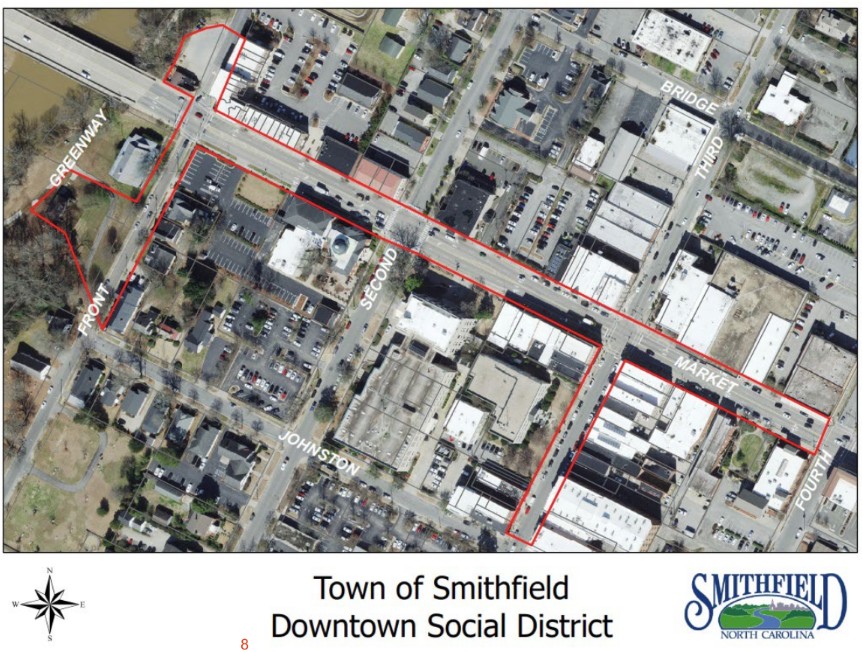
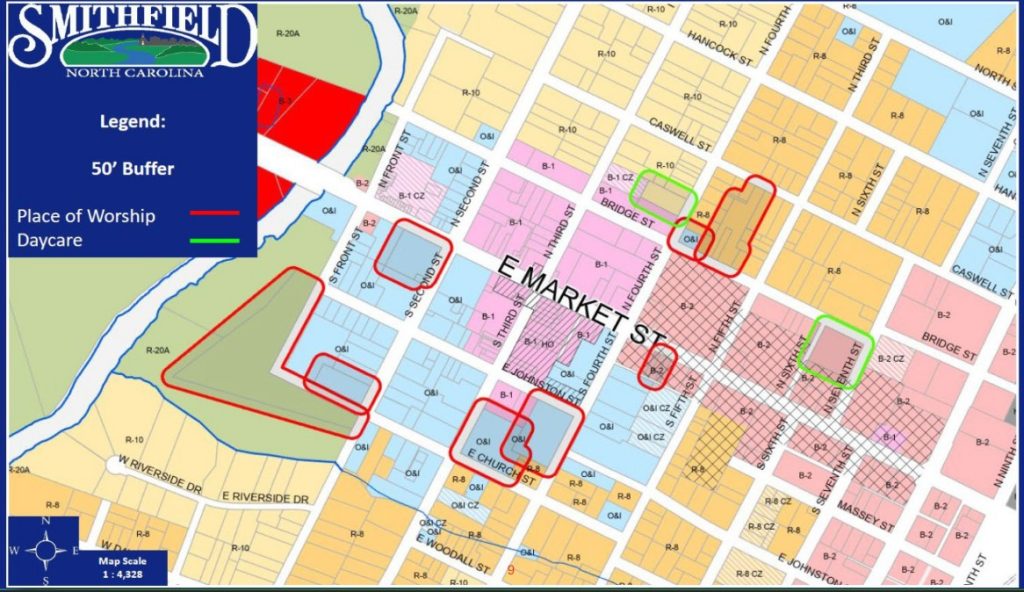
The new ordinance allows bars and private clubs in the B‑1 district under specific conditions, but critics questioned whether those conditions go far enough — or whether the town is moving too quickly to reshape downtown in ways that may not align with community expectations. The amendment requires that any bar be no larger than 2,500 square feet, be located within the Town’s Social District, and maintain at least 200 feet of separation from churches, childcare facilities, and residential properties. No more than two bars will be allowed per block. Outdoor seating must be enclosed with visible barricades and limited access points, and amplified sound must comply with the town’s noise ordinance. All establishments must obtain a Special Use Permit and meet both Town and State ABC permitting requirements.
Even with these restrictions, opponents argued the town is opening the door to uses that could fundamentally alter the feel of downtown. During the public hearing, Billy Massengill of North Second Street warned that placing bars so close to homes could harm family life and property values. He said he was not opposed to bars in general but believed they were incompatible with residential living in such close proximity, especially in a historic district. Pam Lampe, also of North Second Street, said the move “feels a little desperate” and argued that downtown should be reserved for strong retail rather than alcohol‑based uses. She also questioned the impact on the Historic Overlay District and raised concerns about the legality of the petition application itself, noting it had been signed but not fully filled out.
Mayor Pro Tem Sloan Stevens, who backed the change, argued that the town already permits breweries and distilleries in the B‑1 district.
Supporters insisted the change is necessary to keep downtown competitive. Downtown Smithfield Development Corporation Executive Director Heidi Gilmond said allowing small‑scale bars would increase evening and weekend foot traffic, support restaurants, retail shops, and the performing arts center, create jobs and generate additional tax revenue, encourage redevelopment and private investment, and strengthen downtown’s identity as a destination for food, arts, and entertainment. She said a broader mix of businesses makes downtown more competitive, more resilient, and more attractive to both visitors and investors. Gilmond stated research consistently shows well‑managed bars do not inherently increase crime, and that increased activity can improve safety through greater visibility and consistent foot traffic. She emphasized that Smithfield already has safeguards in place to address noise concerns.
Some residents questioned whether the town is prioritizing nightlife over long‑term planning, and whether the change reflects a coherent strategy or a reactive attempt to stimulate activity without fully considering the consequences. Others noted that the proximity of the courthouse, homes, churches, and childcare facilities makes downtown uniquely sensitive to changes in permitted uses.
Town planning staff and the Planning Board recommended approval, saying the amendment aligns with the Town of Smithfield Comprehensive Growth Management Plan and its “Vibrant Downtown” goals. But the council’s vote did little to settle the broader debate. Even with the zoning change, the North Carolina ABC Commission retains final authority over alcohol permits, and must consider neighborhood impacts, traffic, parking, and proximity to churches and schools before issuing any license.
Board members noted during the discussion that The Little Brown Jug at 101 W. Market Street is zoned B‑2, not B‑1 — underscoring that the ordinance change would not apply to the existing downtown bar. Because of restrictions in the newly adopted ordinance, the 100 block of South Third Street is the only likely location for bars and nightclubs in downtown B-1 zoning.
Councilman Travis Scott stood alone in opposing the ordinance change.
Subscribe to get the latest posts sent to your email.