




By David Larson
Carolina Journal
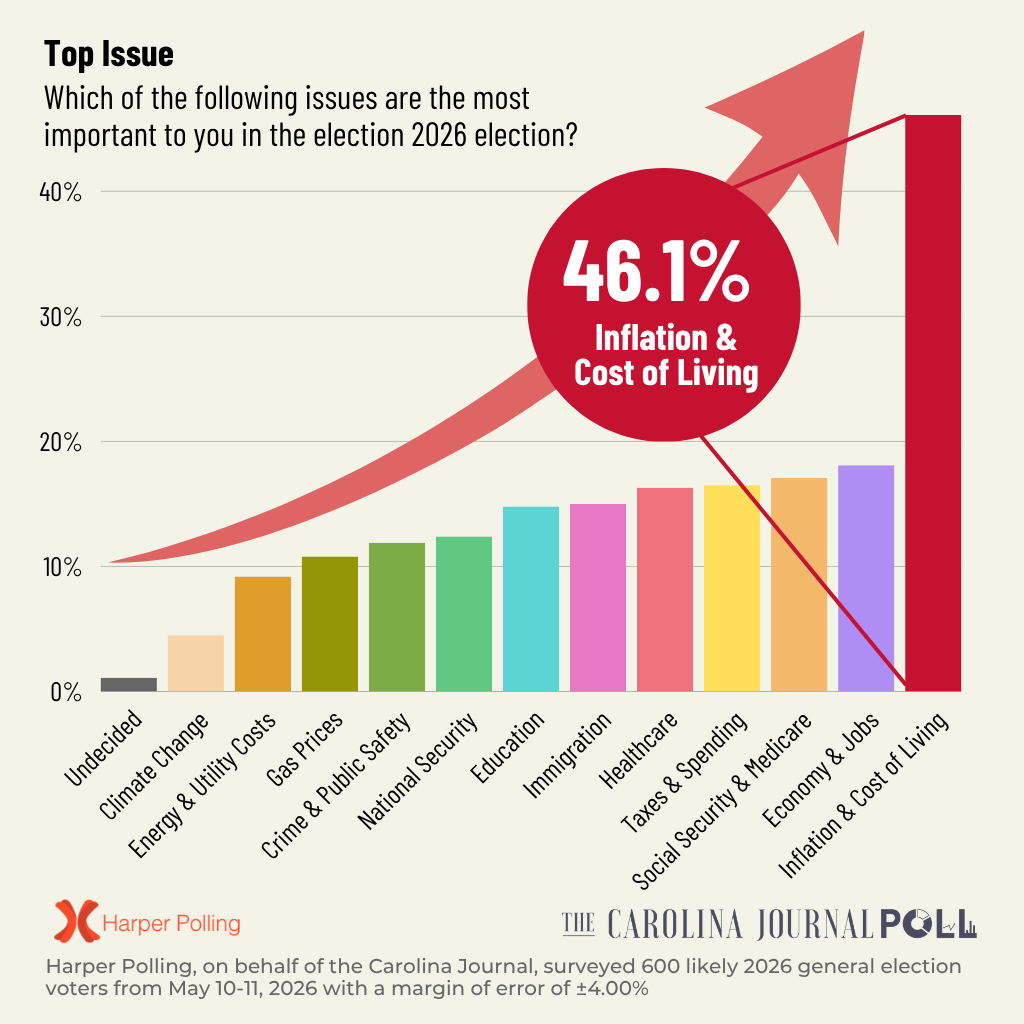
GenZ isn’t the only generation worried about their finances (as I talked about last week with housing prices). In our latest CJ Poll, the third-highest concern among voters, after broader economic worries, was Social Security and Medicare, the two behemoth entitlement programs that seniors rely on after retirement, at 17.1%.
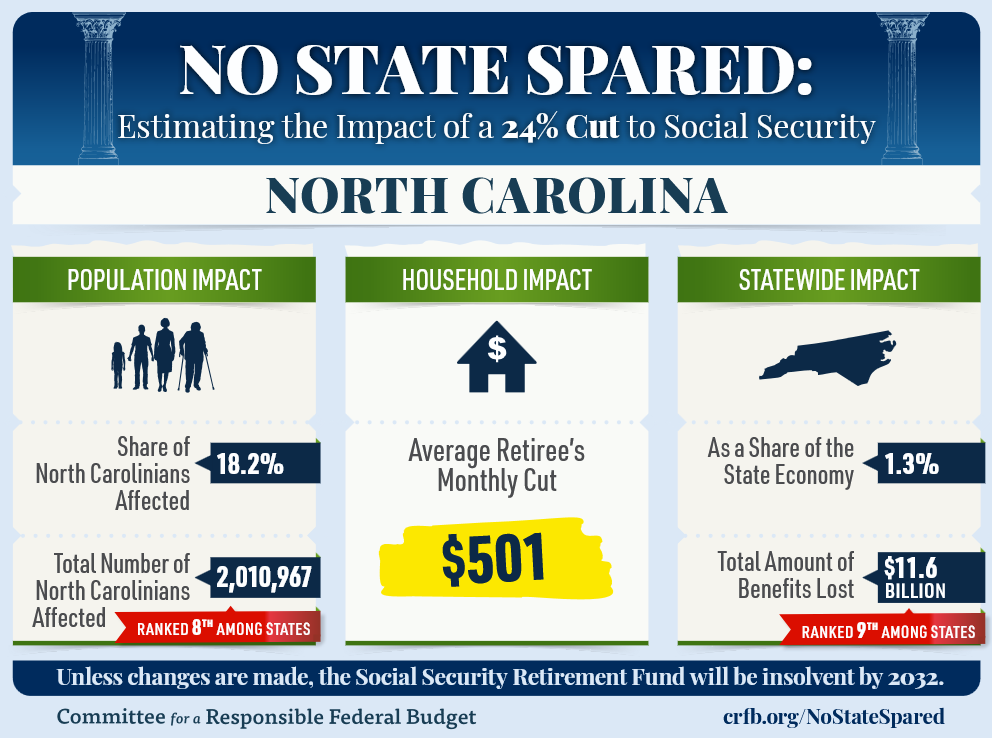
A study by the Committee for a Responsible Federal Budget found that a very similar percentage of North Carolinians, at 18.2%, would be affected if the Social Security trust fund became insolvent.
According to Congressional Budget Office projections, Social Security will reach insolvency by 2032 if nothing changes. And the way that federal statute is currently structured, insolvency would trigger a 24% cut in benefits to beneficiaries, including to over 2 million North Carolinians. This cut would mean $11.6 billion less coming into our state, with a $501 per month average to North Carolina retirees reliant on the program.
For those on a fixed income who are already clipping coupons and pinching pennies (or whatever the modern versions of those are), that’s $501 they can’t easily part with in their budgets.
In 2025, North Carolina was the third most-popular state for retirement in net in-migration, according to AARP. Retirees are a major part of our economy, and Social Security is a major part of their income.
As we saw after Hurricane Helene in the western part of the state, many of those who move to North Carolina to retire live quietly without much contact with friends or family. When they struggle — whether during a natural disaster or a sudden financial crisis — there isn’t always someone reaching out to make sure they’re okay.
Tough decisions
There are both short-term and long-term concerns around Social Security insolvency. It’s unlikely those middle-aged and younger will get the full benefits promised to them. But hopefully they can pivot and make other arrangements in time for retirement.
For those currently retired, there are far fewer options, and re-entering the workforce to increase their income isn’t an option for most due to age and health.
So those in Congress, both the House and the Senate, will have to weigh some very difficult questions.
Basically, there will need to be more revenue coming in and less going out in payments, as is usually the case with a financial problem. For beneficiaries, none of this is fair.
People were told that if they paid their monthly share, or more accurately had it taken from their paychecks whether they liked it or not, when they retired there would be a certain amount coming to them each month. They planned around this money and assumed the word of the United States government would be good. But it doesn’t look like it’s going to be possible to live up to these promises without some major tweaks.
Who do you trust to make them?
As it turns out, 2032 is not only when the projected insolvency will occur, it is also the last year of the term for our next US senator from North Carolina, who will be elected later this year. Whether it’s Democratic former Gov. Roy Cooper or Republican former party chair Michael Whatley, one of their most consequential decisions will be how to confront this slow-motion train wreck. Many of those who will be elected to a two-year term to one our 14 US House seats will likely be involved as well.
Voters, especially those in or nearing retirement, or those who just care about the nation’s debt and fiscal solvency, should be asking all candidates what their plan is to protect seniors, the budget, and the economy from the effects of a Social Security insolvency.
While politicians have been kicking the can down the road for decades, we’ve reached the point where doing nothing is no longer a solution, because it would lead to drastic automatic cuts. Hopefully, somehow, even with the partisan gridlock and showmanship, Congress will be able to come to a real resolution. Seniors across the country, including here in North Carolina, will be watching closely.
David Larson is managing editor of Carolina Journal.
Subscribe to get the latest posts sent to your email.











Congress has refused to do anything for decades. Why in the world would they do something now? There are many more important things for the federal government to focus on! #FreedomFight250 #VoteOutIncumbents
The upcoming Senate election is the only reason for this scaremongering editorial.
They will keep the money coming whoever you choose, they have no choice. The real question is what the money will be worth. The pain will be spread to everyone in inflation. Vote based on the entire economy, not Social Security.
National debt has grown to more than 39 trillion dollars under Trump. The risk of Social Security insolvency has multiplied with Trump saddling our children and grandchildren with unnecessary debt for decades. It is past time to return to intelligent normalcy rather than Trump’s radicalized idiocy. Vote your pocketbook, vote out Republicans.
Nobody wants to mention the money we spend on ILLEGAL ALIENS?? Who do you think milks the system dry??
@Deport: I’m 100% with you on deporting the illegals, but they’re not the ones milking the system dry. According to the GAO, the largest single group of welfare recipients (the ones *really* milking the system) are US citizens. Medicaid (available only to US citizens) accounts for 82% of all federal welfare spending. SSI (also, only available to US citizens) accounts for another 7%. SNAP and TANF are available to lawful residents and green card holders, but they account for less than 10%.
To put it in perspective, the average US taxpayer spends $2700 on welfare programs.
Of that, less than $300 may go to the illegals… $2,400 goes to lazy US citizens. #PutTheBlameWhereItBelongs
Look up Federal Means-tested Programs. Medicaid is less than half the total, and this is largely due to high medical cost. We’ll soon be forced to go to “Medicare for All” by the runaway costs. Literal illegals are technically not eligible, but there is undoubtedly fraud and they increase the cost for everyone by utilizing mandated emergency care and not paying. Asylum seekers are eligible along with work permit holders. SNAP and TANF are about 20% of the total.