SELMA, N.C. — Early on the morning of March 7, 1942, a massive explosion shook Johnston County and left a deep crater at the intersection of two major highways.
Today marks the 84th anniversary of the deadly Catch Me Eye explosion, a World War II-era disaster that killed six people and injured dozens near the junction of U.S. 301 and U.S. 70 in Selma.
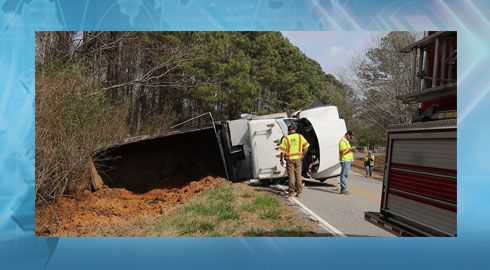
The blast occurred at about 2:57 a.m. after a truck carrying roughly 30,000 pounds of munitions bound for Fort Bragg caught fire following a crash.
Authorities said the military truck had been struck from behind by a car around 1:30 a.m. As the vehicles burned, emergency crews responded and attempted to keep spectators away from the scene.
Despite warnings, a vehicle attempted to pass the burning truck moments before it exploded.
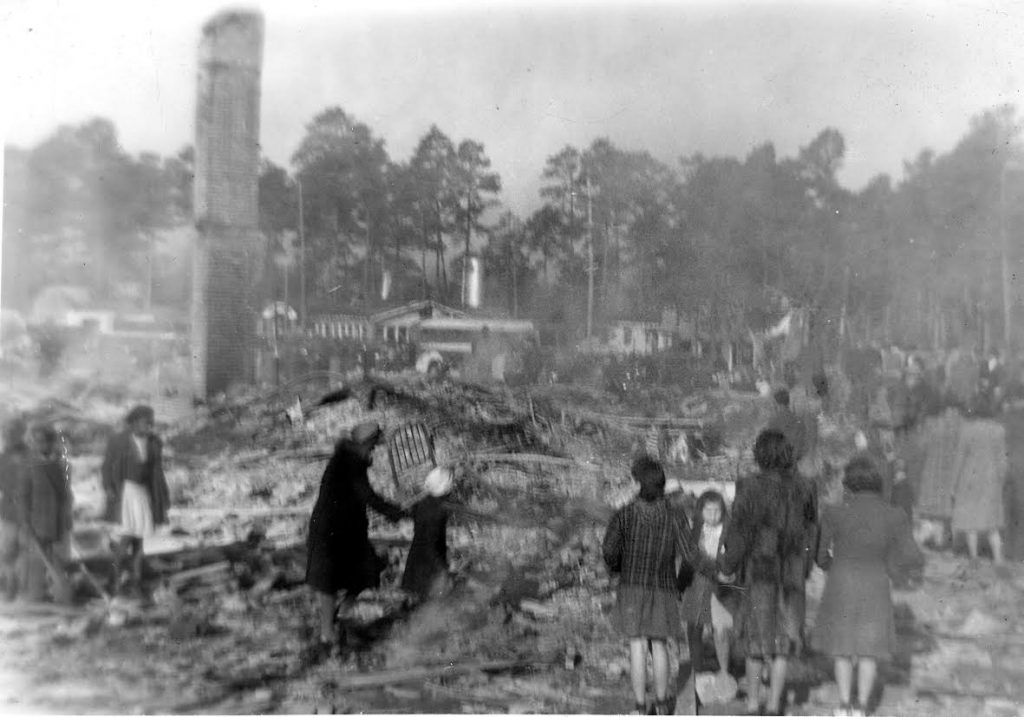
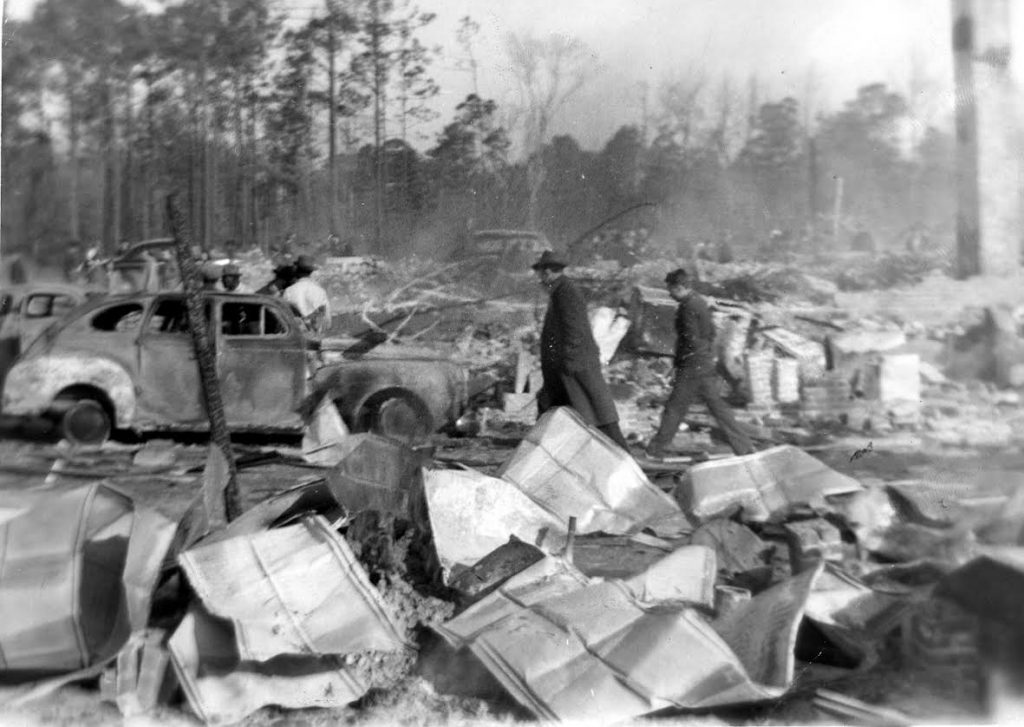
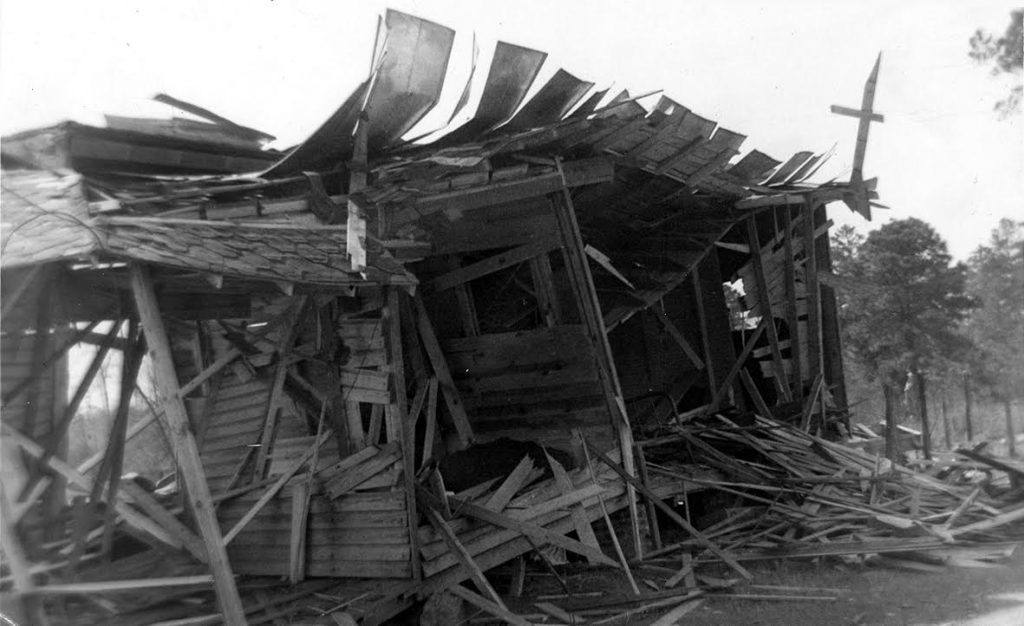
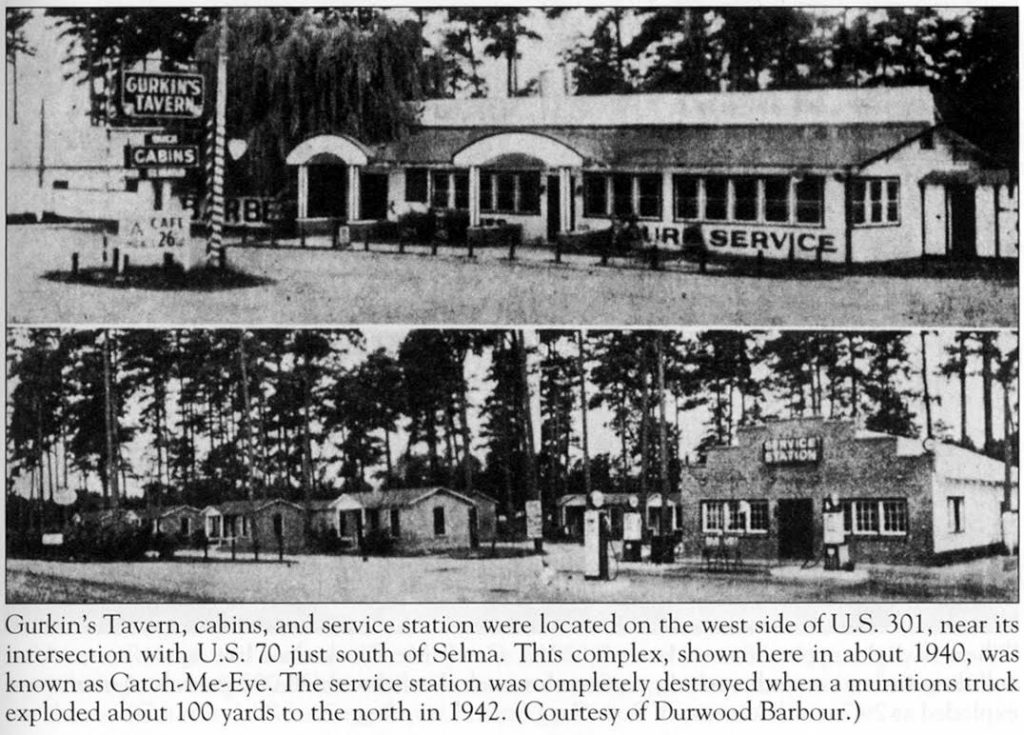
The resulting blast destroyed the nearby Catch Me Eye complex, a popular roadside stop that included a tavern, cabins and a service station. The Hotel Talton, a 2½-story building across the road, was also leveled.
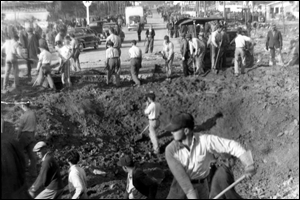
The explosion left a crater described at the time as 20 to 30 feet deep and as long as a railroad car. Debris from the blast was scattered as far as 2½ miles away.
Six people were killed.
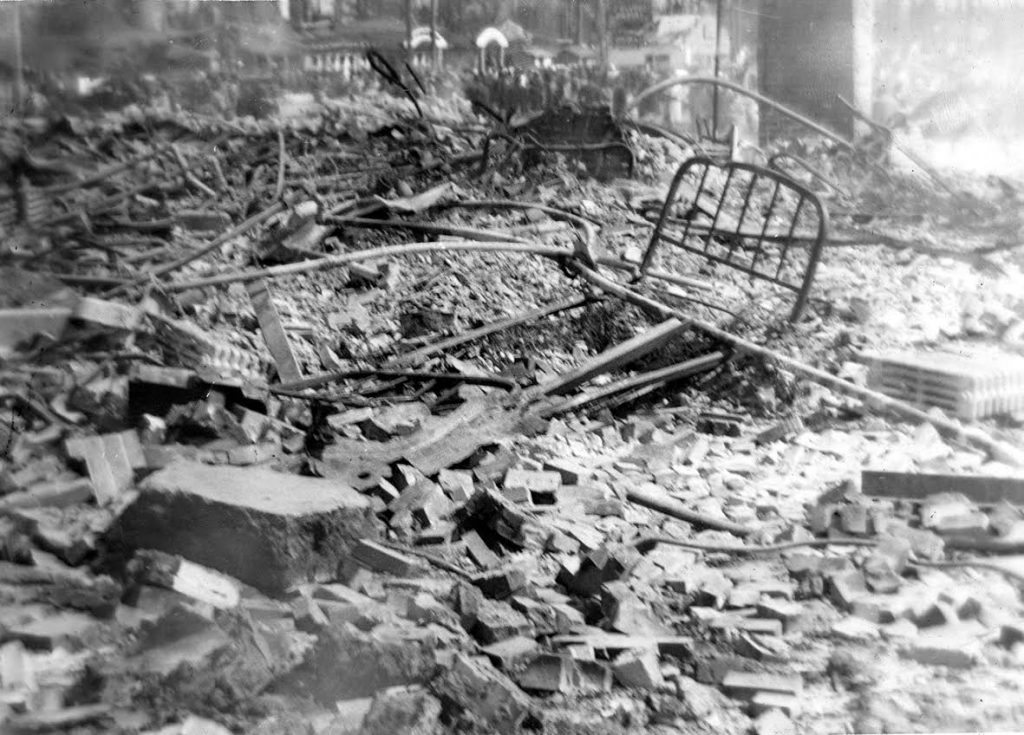
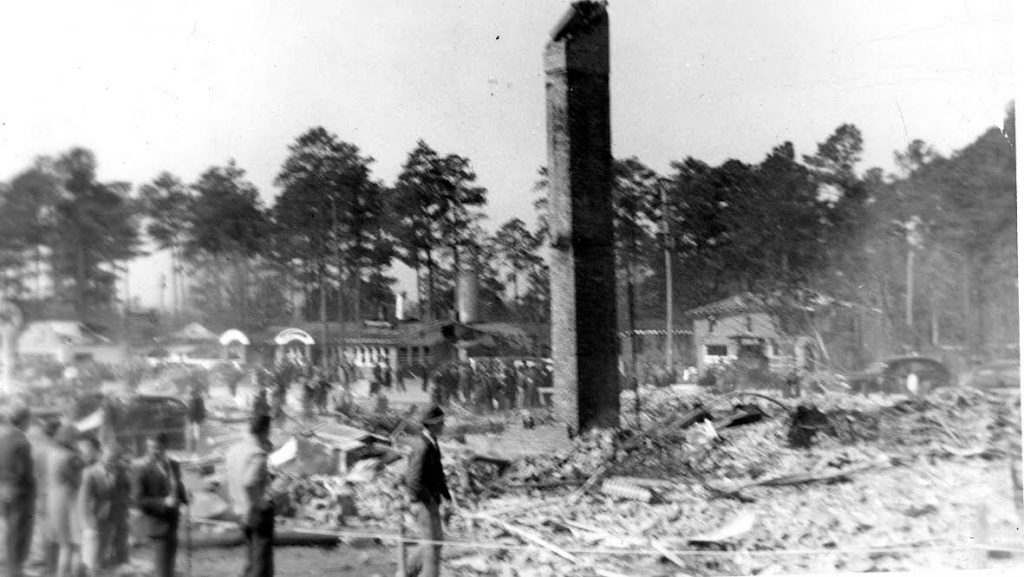
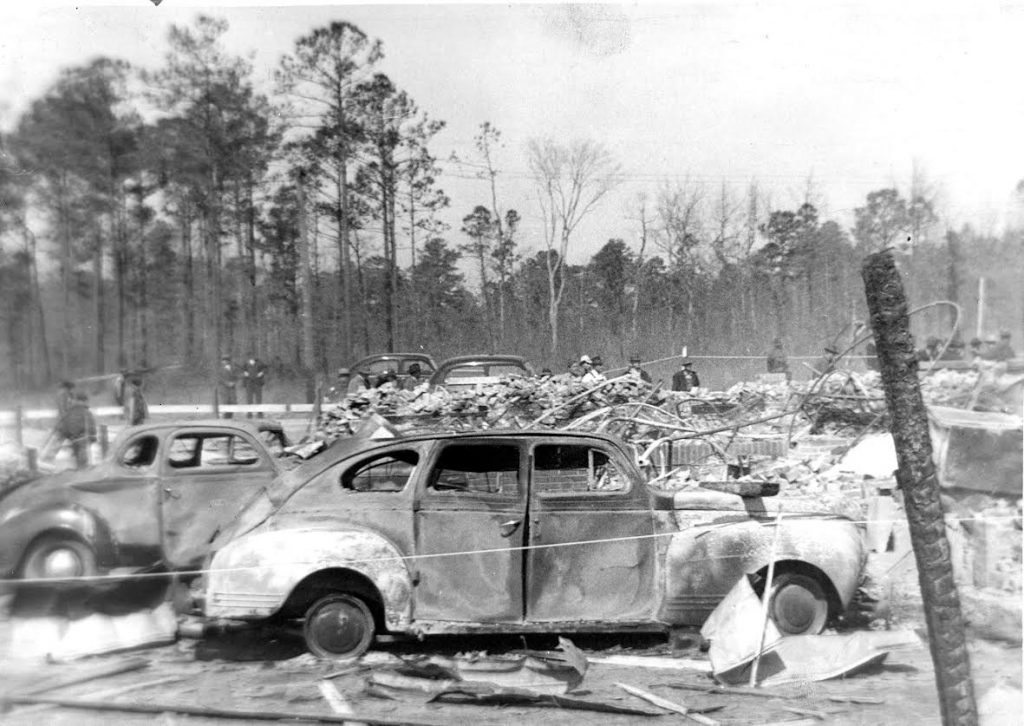
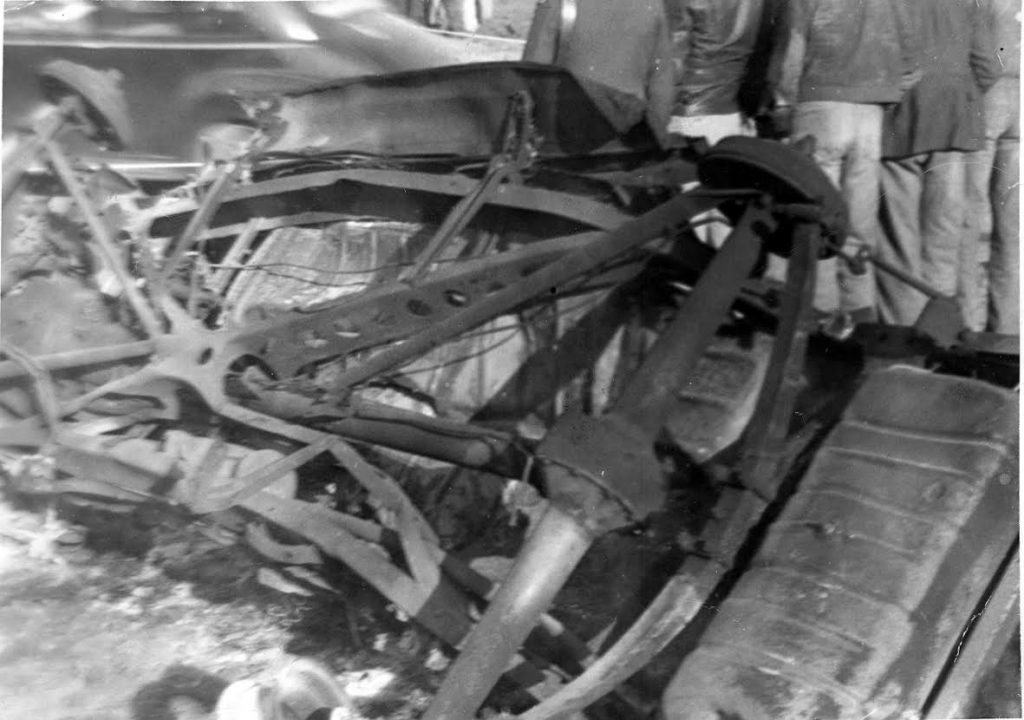
Among them were Edward E. Howell, a taxi driver from Goldsboro, and Jessie Holloway, a café worker who had been staying at the hotel. Witnesses reported the pair were last seen “in a sheet of flames” as the building burned.
Two men passing the scene — George Stroupe of Gastonia, commander of the New Holland Civilian Conservation Corps camp, and Cecil E. Propst of Lawndale, a Game and Fish warden at the camp — were killed instantly when the explosion occurred.
Another victim, Claude “Buck” Mitchell of Dunn, was a bystander who died at the scene.
Minnie Lewis of Raleigh, whose car collided with the munitions truck, later died from severe burns.
More than 50 people were injured, with the most seriously wounded taken to hospitals in Raleigh, Durham, Goldsboro and Johnston County.
The explosion caused widespread damage throughout the area. Windows shattered at Edgerton Memorial Methodist Church in Selma and about 900 window panes were blown out at the Selma Cotton Mill. Some windows were reportedly broken as far as Smithfield, about three miles away.
The blast was heard as far as 40 miles from the scene. In the confusion of the early hours of World War II, some residents feared the explosion was an enemy air raid.
Local authorities and volunteers quickly mobilized. Johnston County’s newly formed civilian defense unit responded alongside firefighters, doctors and nurses who rushed to treat the injured.
Prison labor crews filled the massive crater by the afternoon of March 8, restoring the highway less than 36 hours after the blast.
The disaster drew widespread attention, with the North Carolina Highway Patrol estimating more than 200,000 people visited the site in the days following the explosion.
A federal investigation led by the Charleston Ordnance Depot examined the cause of the blast in the months that followed.
More than 17 years later, in 1959, the United States Congress approved compensation for victims and property owners affected by the explosion. The estates of those killed each received $10,000 in damages.
Today, the site near the intersection of U.S. 301 and U.S. 70 appears ordinary, but the early morning blast remains one of the most dramatic wartime tragedies in Johnston County history.
Witnesses at the time described seeing a towering fireball and sparks swirling hundreds of feet into the air.
“For a moment,” one recalled, “everything was as bright as day.”
(With photos and information from the Johnston County Heritage Center)
Subscribe to get the latest posts sent to your email.