MOUNT OLIVE – Long before Rachel Thomason began making veterinary calls across eastern North Carolina, she was getting up at 6 a.m. to feed livestock before school.
The work was simply part of growing up on her family’s 100-acre farm in Wilson County.
Years later, those early mornings have been replaced by summer days spent loading a truck with veterinary supplies and traveling from farm to farm, sometimes returning home well after dark.
For Thomason, a Veterinary Bioscience major at the University of Mount Olive, the experience has brought a childhood goal into sharper focus.
“I knew I wanted to be a veterinarian since I was six years old,” Thomason said. “I grew up in agriculture, and when I did an internship with a veterinary clinic in high school, that really put the cherry on top.”
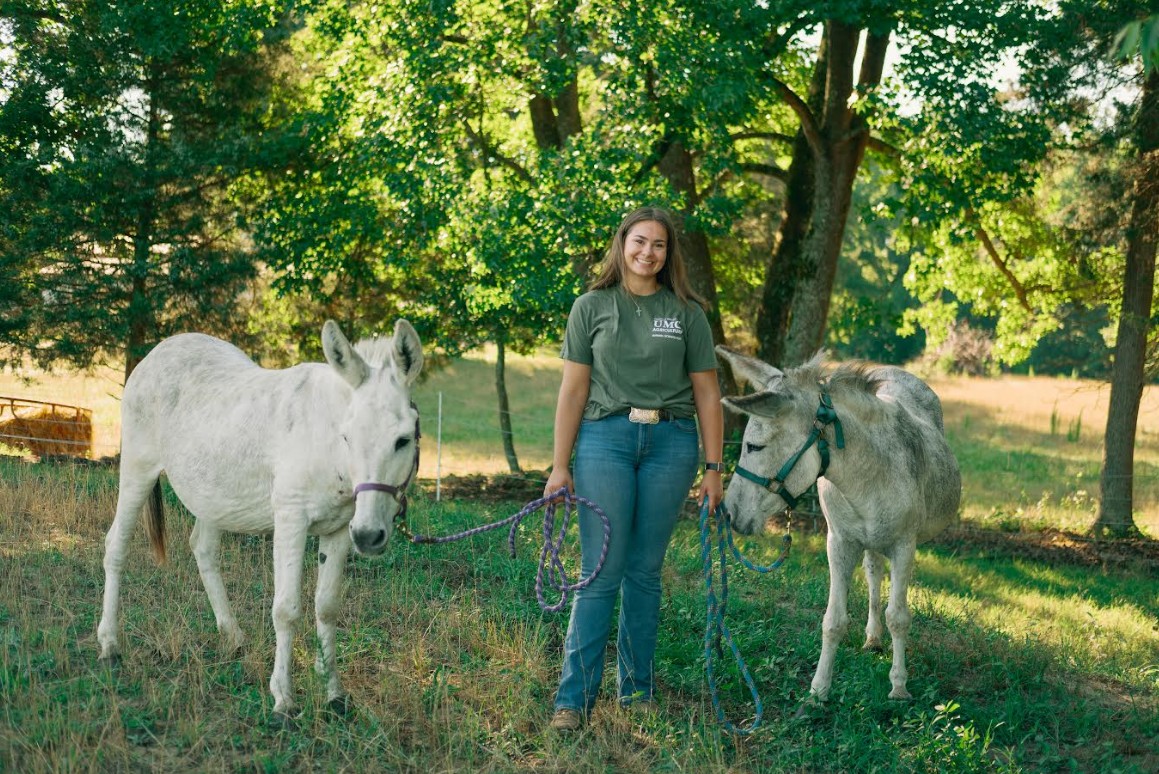
The Elm City native spent the summer working with Black Creek Mobile Vet Service alongside Dr. Jessica Loyd. The internship gave Thomason an up-close look at large-animal veterinary medicine involving horses, donkeys, cattle, sheep, goats and chickens, along with an occasional farm dog or cat.
“We show up, make sure we have everything loaded in the truck, and hit the road,” Thomason said. “A lot of what we do is preventative care like vaccines, wellness exams, and heartworm tests, but every day is different.”
And the days can be long.
Emergency calls can quickly change the schedule and keep the mobile veterinary team on the road from morning until night.
“We ate our peanut butter sandwiches on the way to the next appointment,” Thomason recalled. “Sometimes we were gone from 8 o’clock in the morning until 8 or 9 o’clock at night, depending on what was happening.”
Rather than discourage her, the demanding schedule confirmed what she already suspected.
“This internship has solidified that this is what I want to do,” she said.
Growing Up On The Farm
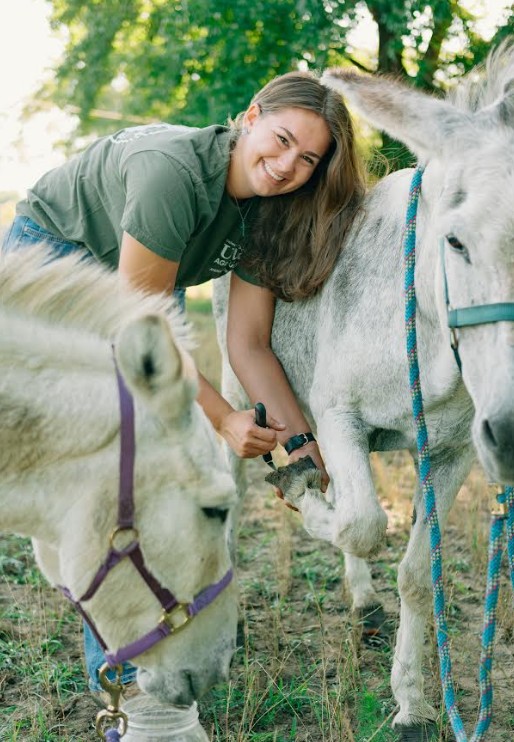
Thomason grew up with her parents, Jason and Amber Thomason, and her younger brother on a family farm where sheep, cattle, chickens and other livestock were part of everyday life.
“We were up at 6 AM feeding livestock before school,” she said. “Then we’d come home and work animals. That’s just how we grew up.”
Through Wilson County 4-H, Thomason became involved in livestock judging and began taking on increasingly complicated responsibilities.
By middle school, she was balancing feed rations for the family’s sheep.
“I was a nutritionist for our farm,” she said. “That’s not something many middle schoolers can say.”
Money she earned showing livestock was placed into a college fund that continues to help pay for her education.
Now entering her junior year at UMO, Thomason is majoring in Veterinary Bioscience and minoring in Chemistry and Biology. She is scheduled to graduate in December 2027 before pursuing veterinary school.
The summer internship has also pushed her outside the areas where she was most comfortable.
Although Thomason grew up around cattle and sheep, she had relatively little experience with horses before working with the mobile veterinary practice.
“I’ve learned so much about equine care that I never would have known otherwise,” she said.
One of her most memorable cases involved reviewing X-rays of a horse. Rather than simply explaining what she was seeing, Loyd asked Thomason to study the images and identify the abnormalities herself.
“When Dr. Loyd told me that I was right, it was a good feeling because it showed me that the things I’m learning in the classroom are starting to click in real-life situations,” Thomason said.
She said other lessons from anatomy and veterinary science courses have taken on new meaning after seeing them applied in the field.
“A lot of things from anatomy class make sense now,” she said. “Almost everything circles back to something I’ve learned in class. It’s easier to understand when you’re seeing it happen.”
More Than Treating Animals
The internship has also exposed Thomason to one of the more difficult sides of veterinary medicine — helping animal owners through difficult decisions.
“There have been some hard conversations,” she said. “Sometimes euthanasia is the best option for an animal, and that’s difficult for owners.”
Those experiences have changed the way she views the profession.
“I’ve learned that being a veterinarian isn’t just about treating animals,” Thomason said. “It’s about helping people make hard decisions and understanding what those animals mean to them.”
At UMO, Thomason has remained active outside the classroom.
She works on the Kornegay Student Farm, serves as a Resident Assistant and Animal Science Club officer, helped establish the university’s Ducks Unlimited chapter, and participates in Young Farmers and Ranchers activities.
Her work as a Resident Assistant has provided a different kind of education.
“Being an RA taught me a lot about conflict resolution,” Thomason said. “I love talking to people, but I learned there’s a difference between talking and helping solve problems.”
She also credits UMO faculty members Dr. Will Farmer and Dr. Sara Lahman with helping guide her through the program.
Plans To Stay In Eastern North Carolina
Thomason’s long-range plans could eventually bring her back to the same rural communities where she grew up.
She hopes to practice large-animal medicine and eventually operate her own mobile veterinary practice.
Her plans go beyond a single truck.
Thomason said she would someday like to develop a network of mobile veterinary practices with friends, with each serving different counties across eastern North Carolina.
“Home is where my roots are,” she said. “I’d love to stay here and serve the communities that helped raise me.”
Thomason is also active at Pleasant Hope Baptist Church, where she participates in worship leadership, youth activities, Bible study and service projects.
She said her faith is closely tied to the career she has chosen.
“Veterinary medicine is a service profession,” Thomason said. “In a way, I’ll be doing the Lord’s work by taking care of His animals.”
Scholarships have also helped make it possible for her to participate more fully in campus life instead of commuting back and forth from home.
“Without scholarships, I probably would have been commuting every day,” she said. “The support I’ve received has allowed me to be part of the campus community.”
For now, veterinary school and her own practice remain down the road.
There are still classes to complete, more animals to treat and plenty more miles to travel.
“The days can be long, but they go by fast,” Thomason said, “because working with animals is exactly where I want to be.”
Subscribe to get the latest posts sent to your email.