SMITHFIELD – The Smithfield Town Council rejected three requests for financial assistance and scaled back two others for a proposed $14 million downtown development that would include restaurants, retail shops and a 250-seat event center.
Grace Homemade International LLC sought five separate economic development incentives from the town for the redevelopment of a former automobile dealership property at 601 E. Market Street, between North Sixth and North Seventh streets.
Town staff estimated the proposed assistance at $1.15 million to $1.49 million, while the developer presented options that could increase the town’s financial commitment.
Following a public hearing November 17, council members approved a five-year property tax incentive instead of the requested 10 years and agreed to limited improvements to town-owned sidewalks, curbs and gutters.
The council rejected requests for water and sewer assistance, funding toward an underground stormwater system, and a three-year revenue guarantee for the development’s proposed event center.
Five-Year SHARP Grant Approved
The first request involved the Smithfield Historic Area Revitalization Plan (SHARP) Grant, which provides financial incentives for qualifying downtown redevelopment projects.
Grace Homemade requested that the town extend its standard five-year grant period to 10 years.
Under the proposal, the property owner would pay taxes on the completed development and receive a portion back through annual grants based on the increase in the property’s assessed value.
The developer estimated the reimbursements could total approximately $400,000 over five years or $800,000 over 10 years.
The council approved the five-year grant but declined to extend it to 10 years.
The actual amount of assistance will depend on the completed property’s assessed value, taxes paid and the terms of the grant agreement.
Water And Sewer Assistance Denied
The second request sought up to $80,000 in assistance for water and sewer taps, utility connections and town system development fees.
Councilman Roger Wood made a motion to provide up to $45,000 toward those expenses, reducing the amount originally requested.
The motion failed on a 4-2 vote.
As a result, the council did not approve any of the requested assistance for water and sewer taps or system development fees.
Sidewalk Work Limited To Town Property
The developer also requested between $104,000 and $183,000 for right-of-way improvements, including sidewalks, curbs, gutters and landscaping.
The proposal included new tree planters and other streetscape improvements along East Market Street and portions of North Sixth and North Seventh streets.
Councilman John Dunn said he believed the development would be a major improvement for downtown Smithfield, but questioned whether taxpayers should pay for improvements on property the town does not own.
Dunn also raised concerns about setting a precedent for other downtown businesses that might seek similar assistance in the future.
He said he had no objection to the town maintaining or improving its own sidewalks, curbs and gutters within the public right-of-way.
Mayor Pro Tem Sloan Stevens made a motion limiting the town’s participation to improvements to existing town-owned sidewalks, curbs and gutters within their current footprint.
The council approved the limited improvements but did not agree to pay for work on private property or the requested tree planters.
Stormwater Funding Request Denied
A fourth request involved a proposed underground stormwater detention and retention system.
The developer estimated the system would cost between $457,000 and $566,000 and requested a town contribution toward the project.
According to the developer’s presentation, the underground system would collect and manage stormwater runoff while allowing more of the property to be used for buildings and parking.
The developer also argued that the improvements could help reduce drainage problems along East Market Street.
Council members did not approve any town contribution toward the underground stormwater system.
Council Rejects Event Center Revenue Guarantee
The fifth request involved Gabriel Hall, a proposed 14,000-square-foot event and conference center occupying the third floor of the new building.
The developer requested a three-year operational revenue guarantee to help secure financing for the project.
Under the proposal, the town would guarantee up to $132,000 annually in event space rental income during the first three years of operation.
If rental income fell below that amount, the town would pay the difference. If the event center generated at least $132,000 in qualifying rental income, the town would owe nothing.
The maximum potential obligation would have been $396,000 over three years.
The developer told council members the event center was projected to generate approximately $1.3 million annually in event business.
Plans include a large ballroom that could be divided into three smaller meeting rooms for corporate events, conferences and private gatherings.
Representatives said a full-day wedding rental could cost between $18,000 and $25,000, while corporate events could rent space for approximately $7,500 per day.
Several council members questioned why the town should guarantee revenue for a privately operated event center.
Wood made a motion to deny the request, seconded by Dunn.
The motion passed unanimously, rejecting the three-year guarantee.
Residents Speak On Taxpayer Assistance
Several people spoke during the November 17 public hearing. Those addressing the council expressed support for the proposed development, although opinions differed over the financial assistance being requested.
David Johnson said the project could be beneficial but questioned whether the town would be setting a precedent by providing substantial taxpayer-funded incentives to a private business.
Johnson called the requested assistance a form of “corporate welfare for businesses.”
He said the owners were seeking public subsidies amounting to more than 10 percent of the project’s cost.
Johnson said he supported development but believed it should be accomplished in a capitalist way rather than relying on taxpayer assistance.
Janice Wagstaff spoke favorably about the investment, saying a successful downtown business would benefit the entire community.
Wagstaff also pointed to accountability provisions associated with the investment and the potential for the project to bring more business activity to downtown Smithfield.
What The $14 Million Project Would Include
The development is being planned by Patricia “Patty” Griffin and Kelly Griffin, the owners of Wendell-based Grace Homemade International.
The project would redevelop approximately 1.15 acres on East Market Street, including the former automobile dealership property that has been vacant for nearly 40 years.
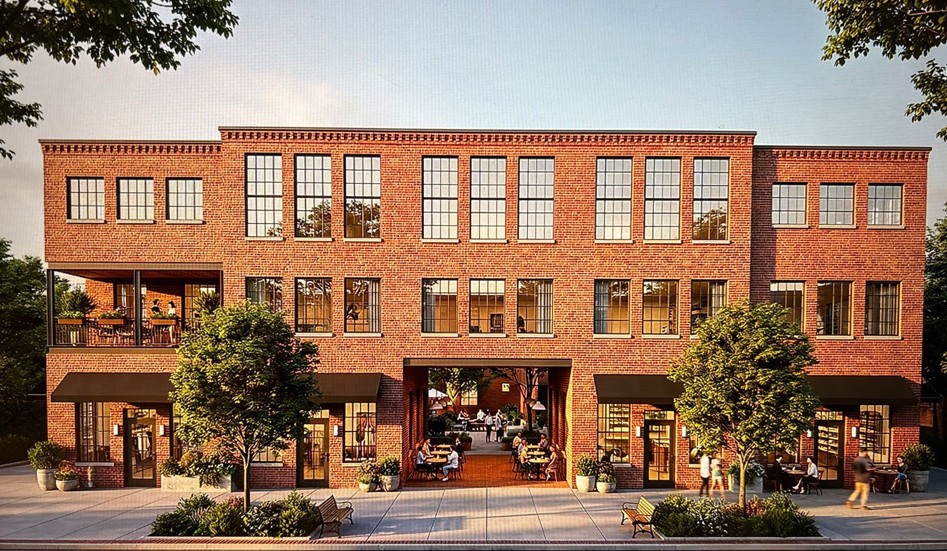
Plans call for demolishing the long-vacant dealership building and an adjacent residential structure to make way for a three-story commercial building containing approximately 42,000 square feet.
The project is being developed in phases.
The first phase involves renovating a former dealership service garage on North Seventh Street into two commercial retail spaces.
The larger second phase involves construction of the new building.
The first floor would feature a marketplace specializing in scratch-made foods, bakery products and a smokehouse. Other planned or potential businesses include specialty food retailers, a butcher shop, coffee roaster and other small retail operations.
The second floor would include an upscale restaurant with indoor and outdoor dining, along with a tea room, private dining space and commercial kitchen.
The third floor would house Gabriel Hall, with seating for approximately 250 people, along with smaller meeting rooms and a lounge.
The developer has said the businesses would emphasize locally grown agricultural products, including partnerships with Johnston County farmers through the JoCo Grows initiative.
The project is expected to create approximately 56 jobs when operations begin, increasing to an estimated 107 jobs within five years, according to projections previously presented to the council.
The owners have also discussed plans to work with local community colleges to provide culinary training and internships.
The developer said the goal is to begin construction in 2027, with completion expected approximately two to two-and-a-half years later.
Grace Homemade representatives said the requested incentives would help secure financing for the project.
Subscribe to get the latest posts sent to your email.