By Colin Tierney
Carolina Journal
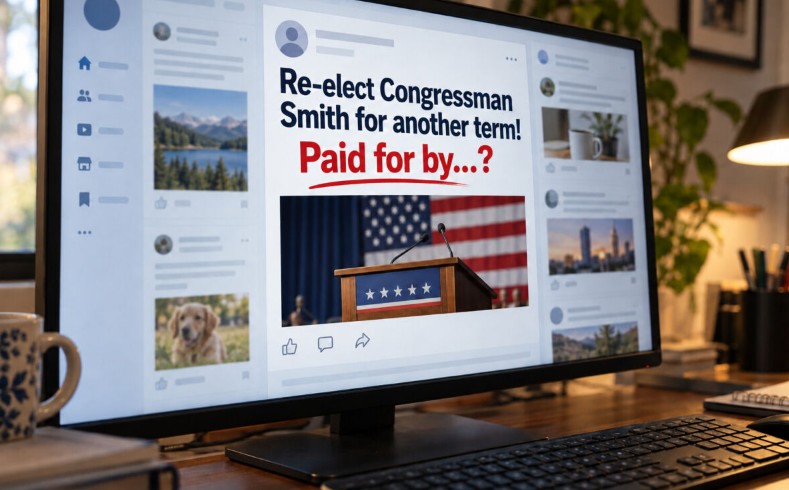
North Carolina political candidates can pay social media influencers to promote their campaigns — but state law does not require the influencers to disclose those payments to their audiences.
In the October 2026 Carolina Journal Poll, 83.4% of likely North Carolina voters said social media personalities should be required to disclose when they are paid to support a political candidate. Only 8.9% said they opposed such a requirement, and 7.7% were unsure.
North Carolina law requires print, radio, and TV political advertisements to include a statement identifying who paid for them. That requirement does not, however, extend to internet or social media political advertisements, according to the North Carolina State Board of Elections’ disclosure legend guidance.
Carolina Journal identified at least one expenditure that appears to be related to social media influencers in its review of campaign finance reports for all candidates in the 28 North Carolina legislative districts rated competitive in the 2026 Civitas Partisan Index.
Evonne Hopkins, the Democrat challenger in House District 35, reported spending $700 on “influencer coordination.” The payment was made to Sara Dickinson, whom the report identified as the secretary of Underwire NC.
Underwire NC describes itself as a “woman-led, grassroots organization that works to empower suburban women of North Carolina to confidently and meaningfully engage in state and local politics.”
Its “Underwire Collective” connects social media influencers with “paid opportunities to educate your audience about issues, local and state candidates and organizations across our state,” according to its website.
Carolina Journal also identified several Instagram videos from at least two users who appear to be influencers promoting Hopkins and other North Carolina legislative candidates. However, it is unclear whether the users were paid or whether any of the videos were connected to Hopkins’ reported campaign expenditure.
Carolina Journal asked Hopkins’ campaign which influencers it worked with and what content was created or posted as a result of the expenditure.
Hopkins’ campaign did not respond to Carolina Journal’s multiple requests for comment.
Underwire NC did not return Carolina Journal’s request for an interview.
Pate McMichael, instructor of journalism at Elon University and director of the North Carolina Open Government Coalition, said while voters have come to expect disclosures identifying who paid for political advertisements in print, on radio, and on TV, they may not realize political content on social media can also be paid for.
“Without knowing who’s paying for it, we’re being denied information,” McMichael said in an interview with Carolina Journal. “That’s really critical to our ability to hold campaigns accountable for their messaging, for their positions.”
He said the lack of disclosure is particularly concerning as more voters, especially younger ones, turn to social media for political information.
The New York Times reported in August that only four states have laws or regulations requiring influencers to disclose paid political messaging. Those requirements apply to state and local elections but not federal races.
North Carolina House Democrats proposed extending the state’s disclosure legend requirement to digital political advertisements as part of sweeping election reform bills in 2023 and again in 2025, but neither received a committee hearing.
Subscribe to get the latest posts sent to your email.