



RALEIGH — A new Special Report from the North Carolina Office of the State Auditor (OSA) found a Hurricane Helene relief station set up in Swannanoa, N.C. had an average daily cost of over $145,000.

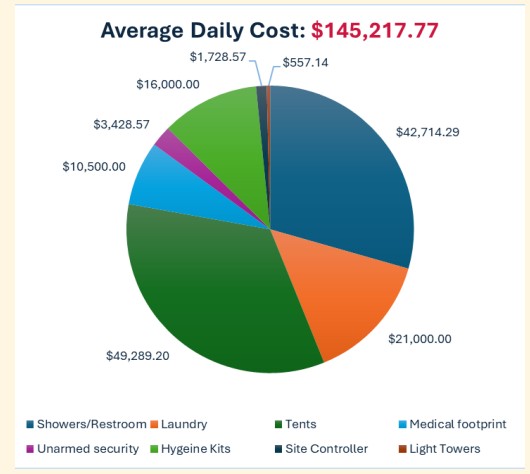
The “Community Care Station” provided the public with showers, laundry, bathrooms, access to cell towers and WiFi, potable and non-potable water, and access to counseling services. The station was open from October 2024 through April 2025. OSA’s Rapid Response Division estimates the total cost of the station to be $27.4 million.
The average daily cost of the station – according to invoices from the vendor – was $145,217. Over the time it was open, the station provided a total of approximately 14,000 showers and 18,000 loads of laundry. The Rapid Response Division estimates the total cost of providing laundry services was $3.9 million, equal to roughly $220 per load of laundry.
“In the middle of a disaster, providing a warm shower, laundry facilities to wash clothes, and a place to rest is responsive to the public need. That said, the government must always be cognizant of costs and routinely assess if we are making the most out of tax dollars,” said State Auditor Dave Boliek. “Billions of dollars are spent on disaster relief, and North Carolinians deserve to know where those dollars are going, how much contracts cost, and what the end result is. The State Auditor’s Office will continue to evaluate dollars spent on hurricane relief. The more information we produce, the more can be learned about where improvements need be made in response to the next disaster.”
Additionally, the Rapid Response Division looked at labor invoices which showed staff at the station were paid an hourly rate of up to $145.50 per hour and given a $215 per diem. These labor expenses were not included in the average daily cost of the station.
The Rapid Response Division recommended more frequent analysis and monitoring of cost, use, and need for Comfort Care Stations, and that planning for future disaster response include contingencies for this type of facility. Further, that tracking of utilization and demand be conducted at the onset rather than a month after the services open.
Note: Per diem is commonly defined as a stipend designated to cover expenses incurred by employees during business travel.
Subscribe to get the latest posts sent to your email.

Comments are closed.






Where there is a disaster, there is also someone to take advantage….
What a rip-off!
WOW!! Someone got rich and I feel that we should know exactly where “our” money goes and to who. Cause if they are getting paid $145.50 an hour to wash clothe and clean showers. I need to reevaluate my services at home. What a freaky joke and way to take advantage of a horrible situation.
Whoever was in charge of this should be fired and charged with a scam
Thank goodness TRUMP has denied the additional funding that the SOCIALIST lib snowflakes wanted for western NC. As shown here, it’s ALL A WASTE AND FRAUD. DOGE should shut this down IMMEDIATELY (and all of FEMA). Let the people (NOT the government) be responsible for taking care of themselves. #StopSOCIALISIM #MAGA #DOGE
It’s always revealing when someone uses a state audit to launch a rant against FEMA, disaster aid, and “socialism” without understanding what they’re reading. First, no, Trump didn’t “deny” anything — this was state spending, not federal. Second, if you think shutting down FEMA is the solution, try telling that to families in western NC who lost homes, jobs, or access to clean water after Hurricane Helene. Let’s see how well “taking care of themselves” works when their town is under water or cut off from emergency services.
Yes, this audit raises real questions — and it should. We need transparency, accountability, and smarter contracting. But throwing out the entire system of disaster relief because some vendor was overpaid is like burning down your house because your plumber overcharged you. Fix the leak — don’t destroy the whole neighborhood out of spite.
This isn’t socialism. It’s basic governance — and without it, the next time disaster hits, you’ll be begging for the very aid you’re trashing now.
Emergency contracts often open the door to price gouging and poor oversight, especially when speed is prioritized over accountability. But the answer isn’t to eliminate disaster relief or blame the people receiving help. The real fix is reforming how emergency contracts are awarded and monitored.
Here are a few things that could help:
1. Pre-approved vendor lists: The state should maintain a roster of vetted service providers with capped rates that are locked in before disaster strikes. No more mystery invoices after the fact.
2. Transparency requirements: All emergency contracts should be made public immediately, including line-item costs. That puts pressure on both vendors and officials to avoid waste.
3. Independent oversight during deployment: Not just after. Send auditors or watchdog teams into the field while relief stations are operating to flag runaway costs in real time.
4. Local capacity investment: Train and fund local nonprofits and public health departments to deliver some of these services — not just big contractors — so we’re not overpaying for basics like laundry and Wi-Fi.
5. Penalties for abuse: Make it clear that vendors who exploit a crisis won’t just lose future contracts — they’ll be referred for fraud investigation.
We don’t fix these problems by shutting down aid. We fix them by demanding smarter, more accountable disaster planning.