By Katherine Zehnder
Carolina Journal
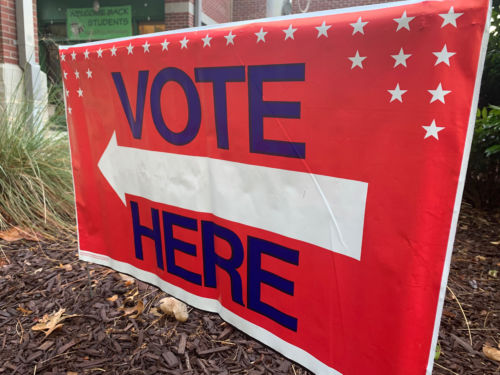
Democrats accounted for the largest share of early ballots out of 2.8 million ballots cast during the early voting period for the 2026 midterm general election.
Voters registered as Democrats cast more than a million ballots, accounting for 38.37% of early ballots; registered Republicans cast 737,349 ballots, or 26.15%, according to the Carolina Elections Vote Tracker, a John Locke Foundation project. Unaffiliated voters held the second-largest bloc of early ballots, casting 991,939 (35.18%).
“The net effect of Democratic front-loading during early voting and the gradual Republican clawback over the next two weeks is that the Democrats have the exact same advantage in turnout share as they had in the previous Trump midterm in 2018: 12.2 percentage points,” Andy Jackson, director of the Civitas Center for Public Integrity at the John Locke Foundation, told the Carolina Journal. “That was a good, but not spectacular year for Democrats.”
This election differs from 2018 in two key ways, according to Jackson. Higher turnout has widened the gap between the parties to 344,562 votes, compared with 253,008 in 2018. Republicans will therefore need to expand their usual Election Day vote advantage by roughly 90,000 to match their 2018 position. Meanwhile, unaffiliated voters account for 35% of early and absentee turnout, up from 27% in 2018, giving their choices greater influence over the final outcome.
In 2018, the 2.07 million early and absentee ballots cast fell just shy of this year’s total, with registered Democrats accounting for 42.44% (878,544) of early ballots, registered Republicans accounting for 30.22% (625,536), and unaffiliated voters 27.04% (559,666). All Vote Tracker figures include absentee-by-mail ballots in early-voting totals.
A total of 3.8 million ballots were cast during the general election in 2018, according to the North Carolina State Board of Elections (NCSBE).
During the 2024 general election, 74% voted early, compared with 65% in 2020, according to NCSBE.
US House Speaker Mike Johnson, R-LA, made campaign stops in both NC-1 and NC-3 on Nov. 2, the day before Election Day. Following North Carolina’s 2025 congressional redistricting, NC-3 is a seat that Democrats could potentially flip. According to the Center for Politics, despite having a voter balance that favors Republicans, polling averages places NC-1 as a Lean D district in this election, favoring incumbent Rep. Don Davis.
In NC-1, 205,458 early ballots were cast; and in NC-3, 154,913 early ballots were cast, according to Vote Tracker. NC-3 shifted from “safe Republican” to “likely Republican” by the Center for Politics, according to a Sept. 29 report. Incumbent Republican Rep. Greg Murphy is expected to hold the seat.
According to the latest Carolina Journal poll published Oct. 22, 32.5% of respondents indicated they planned to vote in person on Election Day; 49% indicated they planned to vote early in person; and 3.9% indicated they planned to vote absentee by mail. The poll, conducted in the field Oct. 18-20, surveyed 600 likely voters and had a margin of error of ±4 percentage points.
Subscribe to get the latest posts sent to your email.