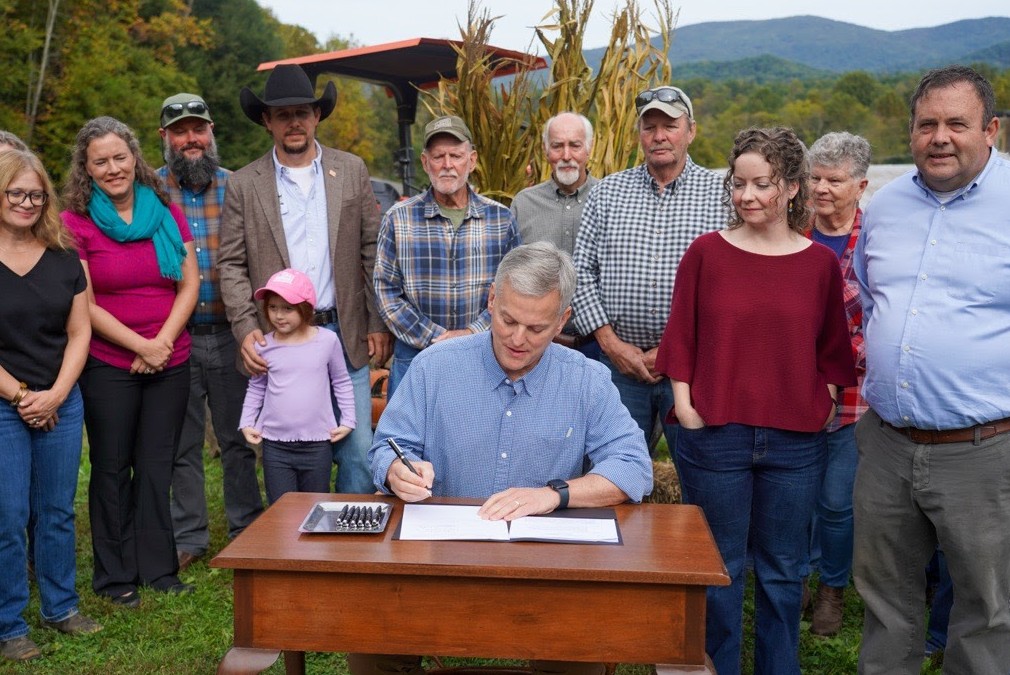
RALEIGH — North Carolina drivers could begin seeing some relief at the pump this weekend after Gov. Josh Stein signed legislation Friday temporarily eliminating the state’s 41-cent-per-gallon motor fuels tax.
The suspension begins Saturday, Oct. 10, and continues through Nov. 30.
The move comes as the average price of regular gasoline in North Carolina has climbed above $4 a gallon and is more than $1 higher than a year ago.
According to AAA, regular gasoline averaged about $4.10 per gallon statewide Friday. A month ago, the average was about $3.90. At this time last year, North Carolina drivers were paying about $2.89.
Diesel prices have risen even more sharply. The statewide average Friday was approximately $5.99 per gallon, compared with about $3.48 a year earlier.
AAA reported regular gasoline averaging about $4.12 in the Raleigh area Friday and $4.04 in Goldsboro.
41-Cent Tax Suspended
House Bill 3, called the “Relief at the Pump” Act, sets North Carolina’s motor fuels tax at zero through the end of November.
The tax is normally 41 cents per gallon in 2026.
The suspension covers gasoline, diesel and blended motor fuels.
That does not necessarily mean every gas station will immediately lower its posted price by 41 cents Saturday morning.
The law specifically allows retailers to continue accounting for the tax on fuel purchased before the suspension took effect. As stations replenish their supplies with fuel purchased without the tax, the law requires the tax savings to be reflected in the ultimate price paid by consumers.
Other market factors, including crude oil and wholesale gasoline prices, will continue to affect pump prices during the tax holiday.
“Rising grocery, utility, and gas prices are making the costs too high for people across our state,” Stein said. “I am signing this bill to keep more money in people’s wallets, but this temporary relief is just one step. I remain committed to continuing to work with anyone who wants to make everyday living more affordable all year long – not just during election season.”
Johnston Lawmakers Support Bill
The measure received overwhelming bipartisan support in the General Assembly during a special session called this week to address fuel costs.
The Senate approved the legislation 41-0. It passed the House 111-1.
All four lawmakers representing Johnston County supported the bill.
Sen. Benton Sawrey and Reps. Donna White, Larry Strickland and Howard Penny voted in favor of the legislation.
State Will Replace Lost Highway Revenue
Suspending the tax is expected to reduce motor fuels tax collections by approximately $362.3 million during the 52-day period.
Under the legislation, however, highway and other state funds that normally receive the tax revenue are to be reimbursed from the state’s Stabilization and Inflation Reserve.
That includes the Highway Fund and Highway Trust Fund, which receive the largest portions of motor fuels tax revenue.
Legislative fiscal analysts estimated the tax suspension would otherwise reduce Highway Fund revenue by approximately $265.4 million and Highway Trust Fund revenue by $89.5 million.
The state will transfer an equivalent amount from the reserve so those funds are not reduced because of the tax holiday.
The Fiscal Research Division estimated the Stabilization and Inflation Reserve had approximately $518.4 million in unappropriated funds before the legislation. The $362.3 million transfer would leave approximately $156.1 million.
Additional Relief For Farmers
The new law also extends relief involving red-dyed diesel fuel used by farmers and certain agricultural businesses.
Through Dec. 31, state officials will not enforce certain civil or criminal penalties against farmers and agricultural operators using dyed diesel in highway vehicles.
The legislation also provides a temporary motor fuels tax exemption for qualifying farmers, commercial loggers, commercial fishermen and certain other eligible users of dyed diesel through the end of the year.
Stein had previously directed the N.C. Department of Revenue to provide state penalty relief involving dyed diesel, while federal officials separately granted relief from federal penalties.
The regular motor fuels tax suspension ends Nov. 30. Unless lawmakers take further action, the state tax will return after that date.
Subscribe to get the latest posts sent to your email.