By Mitch Kokai
The city of Raleigh has no dog in the legal fight between Rockingham County commissioners and opponents of a casino proposed in 2023.
Yet the capital city is interested in a casino-related lawsuit.
The case sits now at the North Carolina Supreme Court. A key issue involves casino opponents’ legal standing to challenge a 192-acre rezoning.
Raleigh leaders filed a friend-of-the-court brief in the case last month. It explains why the high court’s ruling could have a broad impact.
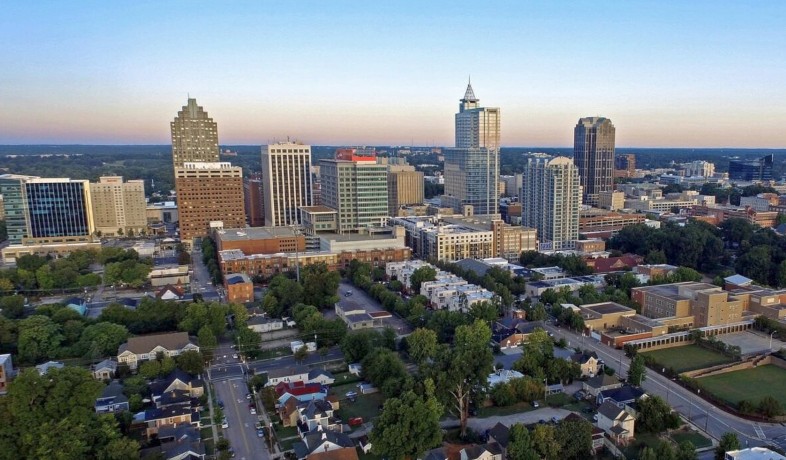
“Raleigh is one of the fastest growing cities in the United States,” city lawyers wrote. “The City is also among the country’s leaders in new construction and is adding more jobs than 99% of other metropolitan areas. Because of this explosive growth, the Raleigh City Council adopted multiple legislative zoning amendments to its Unified Development Ordinance … to help alleviate the pressure and accommodate new residents and businesses by streamlining development processes to … keep housing and other costs more affordable.”
“Due to the increase in residents, projects, and development options, the number of requests for approvals has increased exponentially, with thousands of decisions being made each year,” Raleigh’s lawyers added.
“In short, Raleigh is changing, and while some embrace that change, others are adamantly opposed,” the brief explained. “This has led to more zoning litigation than ever before, both by quasi-judicial appeals and civil lawsuits. These cases contest the City’s decisions to approve projects and/or UDO changes that, among other things, allow more density, building types, and/or land uses.”
It’s not clear who has the legal right to challenge zoning decisions, Raleigh’s lawyers argued.
“The inconsistency in standing law has made defending, and even making, legislative decisions more difficult,” according to the brief.
Raleigh seeks two “critical” results from the Supreme Court’s review of the Rockingham County case, the brief explained.
First, the city wants to “be able to rely on a consistent standing test.” That test should “mandate some identifiable injury to nearby property owners … before a plaintiff can file a lawsuit and put important land use decisions in limbo for years.” That injury should be “special damages,” Raleigh’s lawyers argued.
Lawyers differentiate easily identifiable “special” damages from “general” damages that have no set monetary costs.
Second, Raleigh wants to “have predictability when asserting a standing defense, so lower courts cannot choose between different standards depending on the facts of the case and the project being challenged,” the brief explained.
Raleigh’s lawyers wrote nothing about the dispute between Rockingham County and casino critics. But it’s clear that the capital city saw an opening for North Carolina’s highest court to address an issue with statewide significance.
“The test required to establish standing to challenge a legislative zoning decision has been in a state of flux for years,” Raleigh’s lawyers argued. “Appellate decisions related to the required burden are inconsistent and unpredictable. As a result, legislative standing litigation currently boils down to which line of cases the litigants’ attorneys can convince a judge or appellate panel to adopt in any given case.”
“This is expensive and creates long periods of uncertainty regarding whether a development project can proceed and what rules the City can apply during the often multi-year litigation proceedings,” the brief added. “The question is ripe for a decision by this Court.”
Zoning decisions can be considered either “quasi-judicial” or “legislative.” Yet “the ultimate result is usually the same, i.e., a local government board approves or disapproves either a specific development project or the rules that will govern how and whether a development project will be approved,” Raleigh’s brief argued. “Consequently, it makes sense for the standing requirements for legislative or quasi-judicial decision to be the same.”
“The most logical and reasonable standard to protect the interests of landowners with substantial investments in development projects, and third parties who will legitimately be negatively impacted, is the special damages test,” Raleigh argued. “This will also provide local governments, like the City of Raleigh, with clear rules to avoid and defend lawsuits without spending excessive time and resources figuring out who does and does not have standing.”
North Carolina has “an abundance of well-established case law that has applied the special damages standard for many years,” Raleigh argued. “Definitively adopting this test for legislative zoning civil actions would provide much needed predictability and consistency.”
Many months might pass before the North Carolina Supreme Court renders a decision about Rockingham County’s casino-related rezoning. Raleigh officials hope that decision will offer clear guidance for other zoning disputes across the state.
Mitch Kokai is senior political analyst for the John Locke Foundation.
Subscribe to get the latest posts sent to your email.