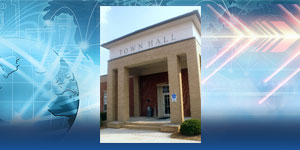
SMITHFIELD, N.C. — The Smithfield Town Council unanimously approved a $58.46 million budget for the 2026-27 fiscal year Tuesday night following a presentation by Interim Town Manager Kimberly Pickett.
No residents spoke for or against the spending plan during a required public hearing held before the vote.
The adopted budget maintains the town’s property tax rate at 45 cents per $100 valuation, while adding four new full-time positions, providing funding for employee merit increases, and continuing investments in public safety, infrastructure and utility systems.
Although the tax rate remains unchanged from the current year, it is higher than the town’s revenue-neutral tax rate of 42.5 cents per $100 valuation. The downtown service district tax rate will remain at 16 cents per $100 valuation, compared to a revenue-neutral rate of 15.8 cents.
The budget totals $58,462,433 and includes three major operating funds: a $24.8 million General Fund, a $14.2 million Water and Sewer Fund, and a $19.4 million Electric Fund.
Personnel costs continue to be a significant component of the spending plan. The budget includes funding for up to a 2 percent merit increase for all full-time employees. It also accounts for increased retirement costs mandated through the North Carolina Local Government Employees Retirement System, with employer contribution rates rising from 14.35 percent to 15.10 percent for general employees and from 16.10 percent to 17.10 percent for law enforcement officers.
Property and liability insurance costs are projected to increase by 6 percent, while medical insurance expenses are also expected to rise by 6 percent.
The budget adds four new full-time positions across town government, including three Battalion Chiefs within the Fire Department and one Facility Maintenance Worker in the Parks and Recreation Department.
Among the largest departmental budgets, the Police Department will receive $6.84 million, an 8 percent increase from the current year. The budget includes funding for two patrol vehicles, portable radios and batteries, radar units, patrol shields, tracking equipment, specialized response team equipment, and a Cellebrite digital forensics system.
The Fire Department budget increases 30 percent to $5.21 million. In addition to the three new Battalion Chief positions, funding is included for radio upgrades, replacement fire apparatus, land acquisition for a future fire station, station improvements, and other equipment purchases.
Planning Department funding rises 27 percent to $651,829. Projects include sidewalk improvements along Venture Drive and implementation of new software systems.
Information Technology shows one of the largest percentage increases, rising 42 percent to $267,038 as the town continues consolidating technology services under a centralized department.
The Finance Department budget increases 24 percent to $213,497, while the Non-Departmental budget rises 23 percent due largely to increased insurance costs and economic development incentives.
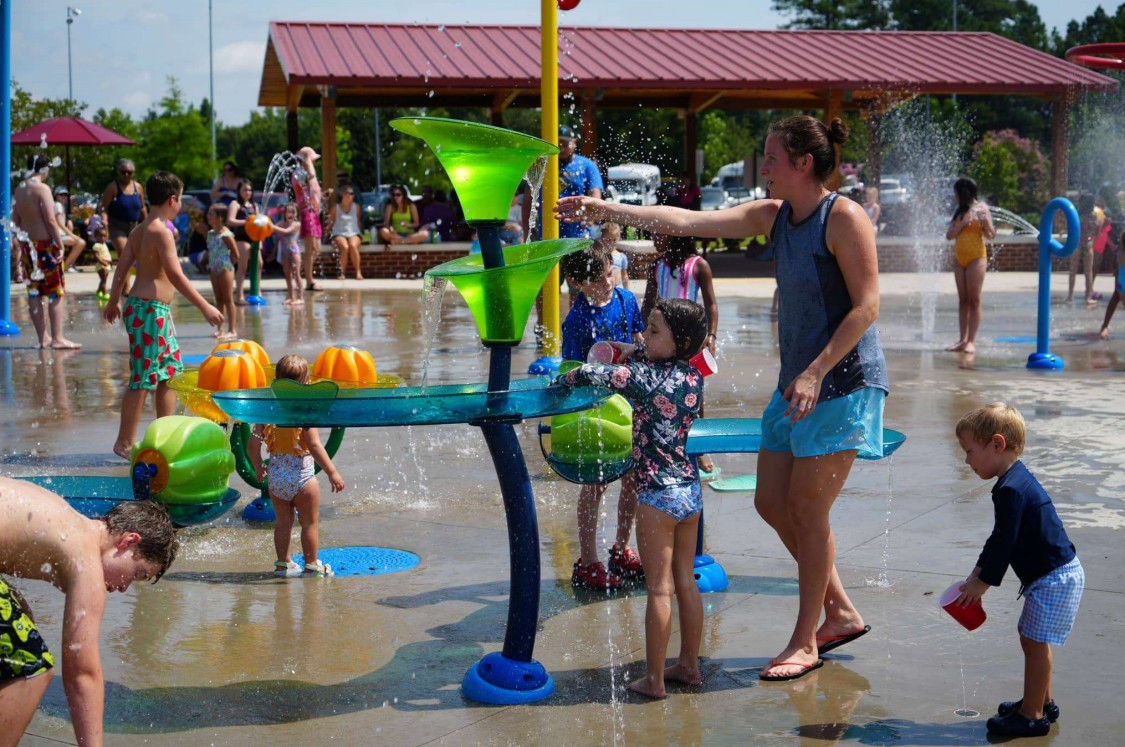
Parks and Recreation will receive $1.49 million, a 6 percent increase. The budget includes funding for park improvements, accessibility projects, parking lot upgrades, athletic equipment, and the department’s new maintenance employee.
The Aquatic Center budget increases 16 percent to $1.49 million, including funding for facility improvements, carpet replacement, parking lot work, and a new scoreboard.
The town’s Powell Bill street maintenance fund increases 53 percent to $940,000 as Smithfield continues focusing on street resurfacing projects.
Water and sewer operations are budgeted at $14.2 million, representing an overall 3 percent increase. Major projects include water plant improvements, PFAS treatment initiatives, elevated tank work, pump station upgrades, and water line improvements.
The electric utility budget totals $19.4 million, also reflecting an overall 3 percent increase. Planned projects include voltage conversion work, utility equipment purchases, and system infrastructure improvements.
Town officials are not proposing immediate increases in water, sewer, sanitation, or electric rates despite rising wholesale costs. Johnston County has announced a 10 percent increase in wholesale sewer treatment rates effective Sept. 1, while wholesale electric costs are expected to rise by approximately 4.5 percent. Smithfield officials said utility rate studies are underway and future recommendations may be presented later in the fiscal year.
During the budget presentation, town officials highlighted how Smithfield utility customers compare with neighboring municipalities.
Based on an average family of four using 1,200 kilowatt-hours of electricity and 3,000 gallons of water monthly, the average utility bill in Smithfield is estimated at $230.45. Comparable monthly bills were listed at $305.21 in Selma and $351.83 in Clayton.
The comparison showed Smithfield customers paying lower overall combined utility costs than customers in both neighboring towns for the same level of service usage.
Subscribe to get the latest posts sent to your email.