By David Larson
Carolina Journal
In 2019, 22.4 out of every 100,000 North Carolinians died of a drug overdose. That was 2,352 deaths total, about double what the number had been in 2010. But over the next four years, that number would double again, to a record high of 4,442 deaths, 40.9 per 100,000 people. A similar trend was happening nationwide, as drug overdose deaths, which had only broke 10,000 a year in the 1990s heroin epidemic, reached over 100,000 per year for the first time.
But North Carolinians, and Americans in general, did not simply throw up their hands in despair as their family, friends, and neighbors died by the thousands. Nonprofits, law enforcement, individual citizens, and government at all levels began coordinating a massive effort to confront the problem. And, all evidence suggests, it is working.
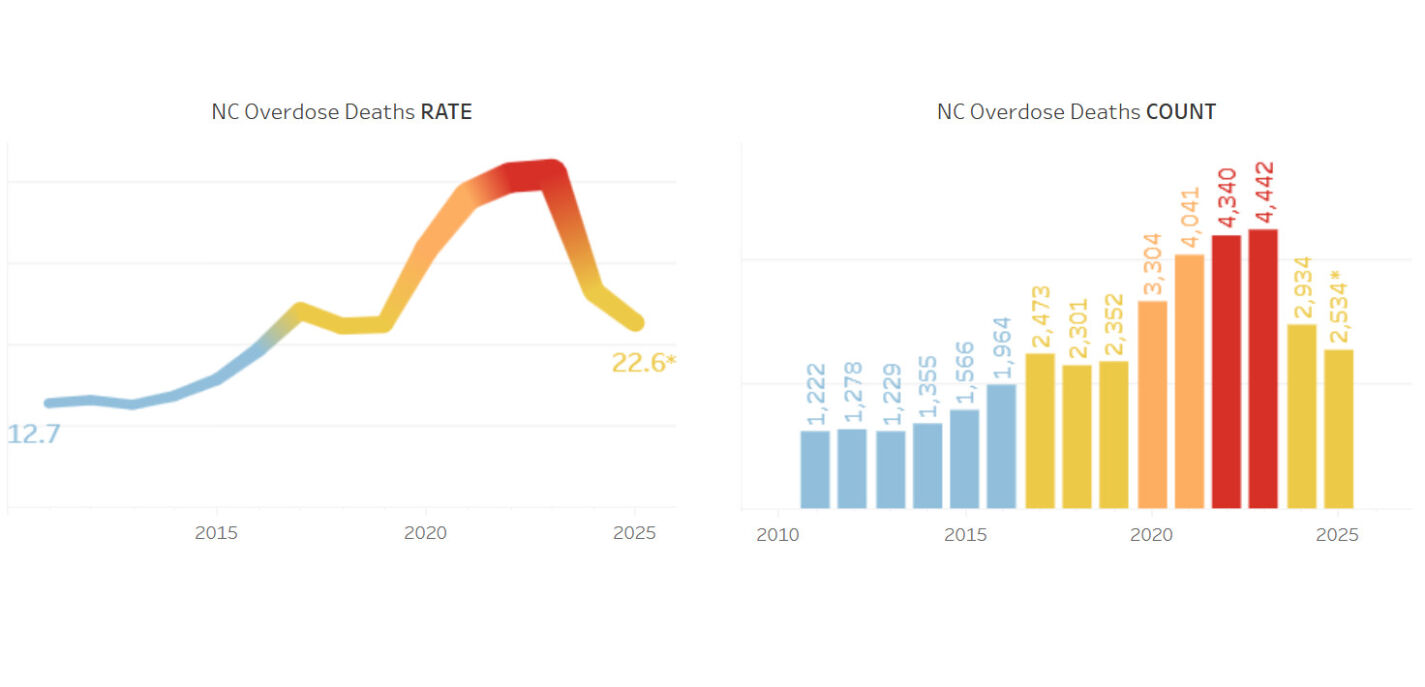
Since, the peak in 2023, overdose death numbers dropped from 4,442 to 2,934 in a single year. Then it dropped further in 2025 to 2,534 deaths, and deaths appear to be on track to continue dropping in 2026.
The last deaths per 100,000 rate of 22.6 in 2025 is virtually identical to the rate (22.4) from 2019 before the numbers spiked. We should all take a moment to appreciate this fact and be grateful for all those lives that may have been lost but weren’t.
How did it happen?
But of course the immediate question that comes to mind, especially if we want that number to keep dropping back to what it was in 2010, and lower, is: What are we doing that is working so well?
The answer to that question, of course, is very different depending on who you ask. If you ask those focused on a law-and-order approach, they would likely credit the many state and federal laws to increase penalties around drug trafficking, including North Carolina’s 2023 strengthening of the “death by distribution” statute.
If you ask border hawks, or the Trump administration, they point to increased crack downs on drug trafficking organizations that have reduced flow of certain targeted drugs, especially fentanyl, into the country, with the White House website saying, “As of September 30th, the Trump Administration had decreased fentanyl trafficking at the southern border 56% from a year prior.”
If you ask many in the drug treatment world, and state government leaders, they’d point to the massive appropriations being given to local governments in North Carolina due to opioid settlements. The state is receiving $1.6 billion in settlement money, and due to the Memorandum of Understanding on how that money will be spent, 85% is given directly to county and municipal governments. The remaining 15% is allocated by the state legislature for wider initiatives. This allowed a lot of flexibility and for locals to do what works best for their communities.
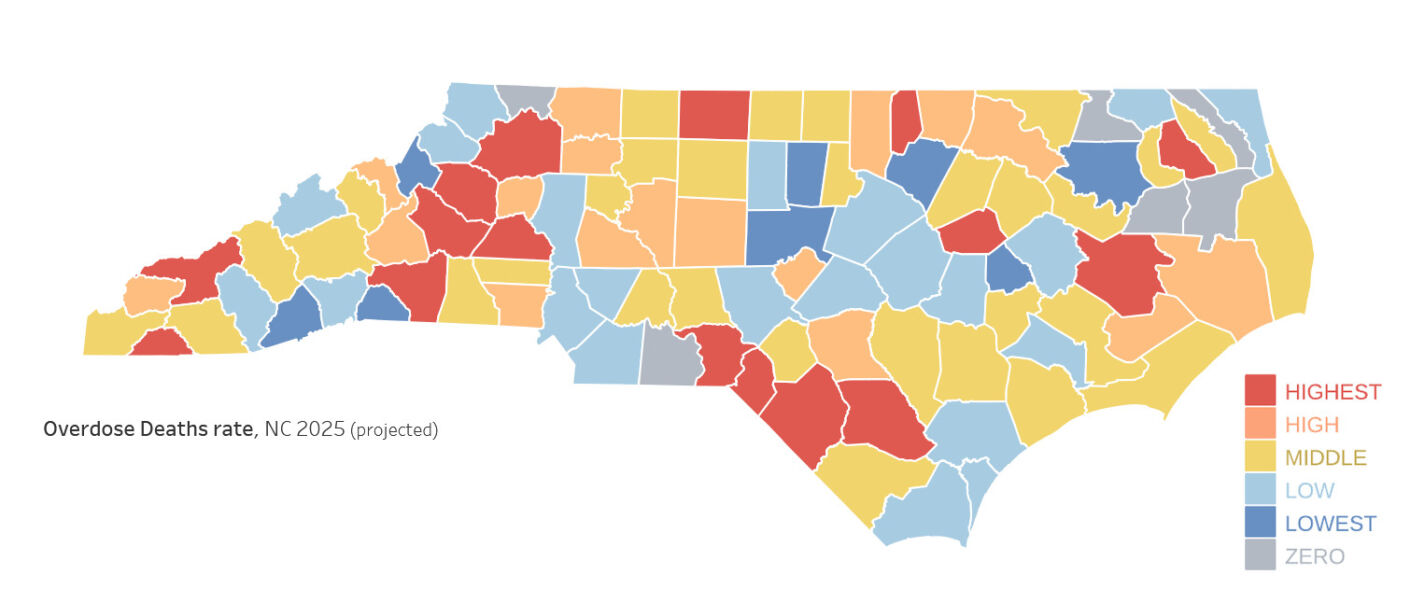
This money started flowing right at the peak of state overdose deaths and appears to be working in most areas of the state (though Cherokee and Lumbee tribal members remain disproportionately affected, along with a few pockets in the rural west and east).
All agree that the much-wider use of naloxone, often called by the brand name Narcan, was a major part of saving lives. This drug can immediately reverse an overdose that in the past would have led to death. First responders across the country now have the drug ready to go and are trained on when and how to use it.
Harm Reduction advocates also credit programs like needle exchanges and “medication assisted treatment” (MAT), where opioid users are given a steady dose of prescription opioids like buprenorphine or methadone for safer use and to allow stability in their lives.
But a Brookings Institution report said changes around naloxone or MAT did not produce “changes of the magnitude needed to explain an approximately 50% reduction in fentanyl-involved deaths between June 2023 and August 2025.”
My hunch is that it was all of the above. The drug supply has shrunk somewhat (and changed to less deadly varieties) due to border and local law enforcement crackdowns. Those who are struggling with addiction have many more options for help due the settlement money and its locally focused strategy. Those actively overdosing are also much more likely to be saved by first responders who have naloxone ready to go. Many everyday citizens even now carry naloxone with them in case they may need to save someone’s life.
This is all great news showing real progress. But we shouldn’t let our guard down or stop trying to reduce the number of overdose deaths in our communities to zero.
David Larson is managing editor of Carolina Journal.
Subscribe to get the latest posts sent to your email.